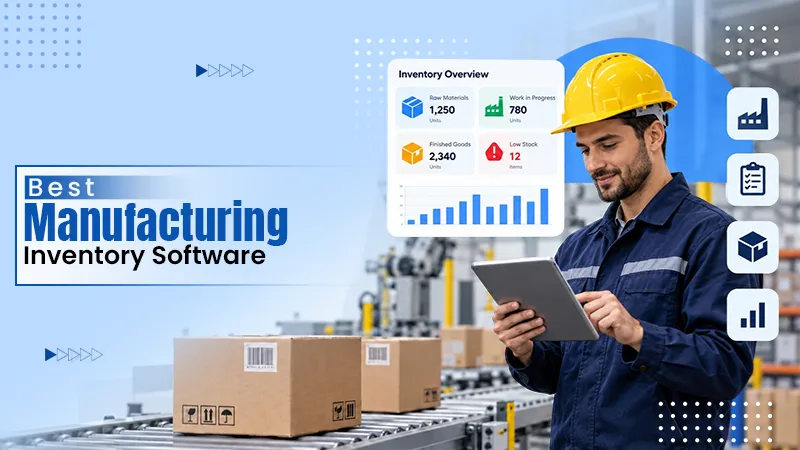
Businesses need manufacturing inventory management software to help them track inventory levels to avoid stockouts and overstocking of raw materials and manage spreadsheet data accurately by automatically updating inventory data.
11 Best Manufacturing Inventory Management Software for Production Businesses
POST BY
PUBLISHED
October 26, 2026
Businesses dealing in production often deal with stock imbalances, improper raw materials tracking, or manual errors in stock data entries, leading to inventory management issues. Manufacturing inventory management software is a digital tool that helps manufacturing businesses to track raw materials and finished goods across various locations, provides ERP integration with other systems, and performs demand forecasting to manage inventory needs.
In this detailed article, you will learn about the top 11 manufacturing inventory management software options, software benefits, and measures to choose the right manufacturing and inventory software.
Quick Answer: Manufacturing inventory management software is a digital solution that helps manufacturing businesses to track inventory levels, work in progress across all locations, and perform demand forecasting to make informed decisions. Some of the best manufacturing inventory management software are Cin7, Fishbowl, NetSuite, Odoo, and Katana, which have positive reviews and give the best possible services to businesses.
Table of Contents:
- What is Manufacturing Inventory Management Software?
- Top 11 Manufacturing Inventory Management Software
- Benefits of Inventory Manufacturing Software
- Difference Between Inventory Management Software and Inventory Manufacturing Software
- How to Choose the Right Manufacturing and Inventory Software?
- Conclusion
- Frequently Asked Questions
What is Manufacturing Inventory Management Software?
Manufacturing inventory management software is a digital tool/solution that tracks raw materials and finished goods inventory levels across many locations. It checks the work-in-progress of the production process and generates real-time analysis reports for demand forecasting of the goods/raw materials to be reordered.
How Does Inventory Manufacturing Software Work?
Manufacturing Inventory management software works in a simplified manner, starting from tracking raw materials, checking work in progress, and updating the stock in the finished goods list. Here is the complete procedure for how the manufacturing, inventory, and management software works.
- Raw Material Listing: According to the purchase order, the raw materials stock is updated in the software.
- Connection of Bill of Materials: Raw materials are connected to the bill of materials to automate inventory reduction and cost calculation and to reduce wastage of raw materials.
- Addition of Finished Products to Inventory: It adds the fully finished goods into the stock/inventory.
Also read: 10 Best Resource Management Software: Comparison, Features and Differences
Top 11 Manufacturing Inventory Management Software
There are several manufacturing and inventory management software options available online that help the production business to streamline inventory management for the entire stages of production with real-time visibility reports and performance tracking, updating data entries, seamless integration with other accounting/management software, and complete warehouse management.
Popular inventory manufacturing software includes Fishbowl, Cin7, Ply, NetSuite, Katana, Odoo, etc. Let’s look at the detailed features of the top manufacturing inventory management systems.
1. Fishbowl
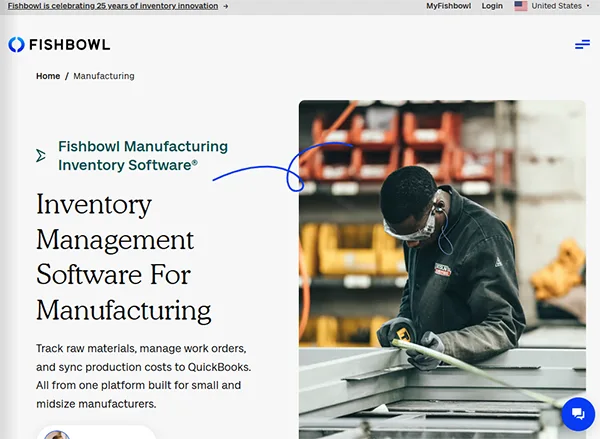
Fishbowl is a manufacturing and inventory software that tracks real-time inventory levels, does material resource planning, and vendor management. It connects purchase and sales orders directly to the manufacturing process and manages warehouse operations, such as tracking inventory by each owner. The software also integrates with other accounting tools and software for seamless data transfer and workflow operations.
| Key Features |
|
| Best For |
|
| Pricing |
|
| Free trial |
|
2. Cin7
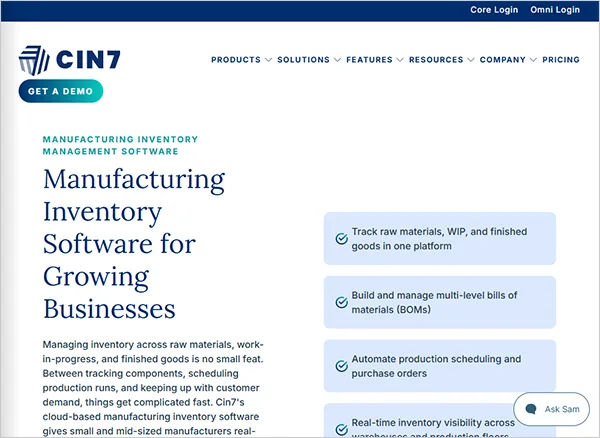
Cin7 is a manufacturing inventory management system that handles automated reordering and connects to third-party logistics providers for raw material access. Warehouse management keeps the location in sync to help with order fulfillment and tracking inventory. It provides seamless integration with various e-commerce platforms and accounting software like Amazon, Shopify, QuickBooks Online, etc., for better service delivery and data entry updates, respectively.
| Key Features |
|
| Best for |
|
| Pricing |
|
| Free Trial |
|
3. Odoo
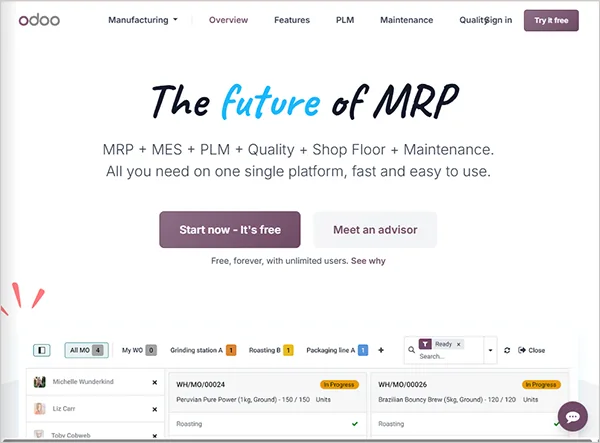
Odoo is a manufacturing and inventory management software for manufacturing, tracking inventory levels, and managing warehouse operations altogether. It facilitates demand forecasts for finished goods and production scheduling for new purchase orders, and tracks production performance and overall costing in the production stages. For warehouse, it does barcode scanning, configuring the best routing for punctual delivery of goods to the customers.
| Key Features |
|
| Best For |
|
| Pricing |
|
| Free Trial |
|
4. InFlow
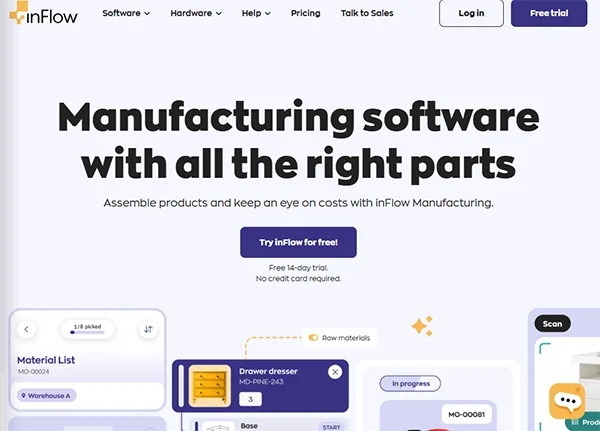
InFlow is a manufacturing and inventory management software that tracks inventory by barcode number for each product, irrespective of the device used. It manages warehouse operations with an organized method of packing, picking, and shipping products to the customer. The software helps in manufacturing by gathering the bill of materials to get the component data for each product.
| Key Features |
|
| Best for |
|
| Pricing |
|
| Free Trial |
|
5. Ply
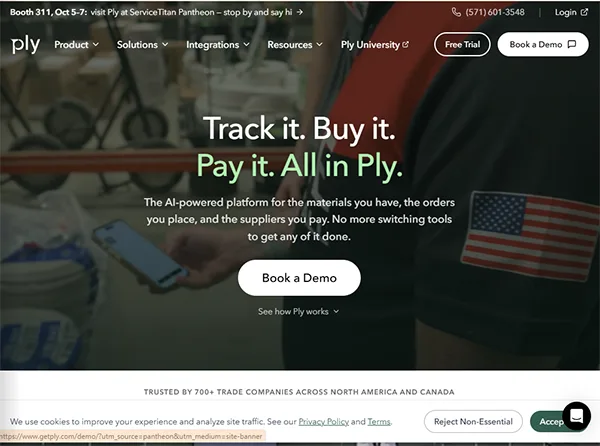
Ply is an inventory management software for the manufacturing industry that helps to track the stocks through various job sites and manages stock by checking min/max levels. It compares supplier prices and creates and tracks purchase orders with supplier integration; material requests can be done anytime and from anywhere using messages or AI chat.
| Key Features |
|
| Best for |
|
| Pricing |
|
| Free trial |
|
6. NetSuite
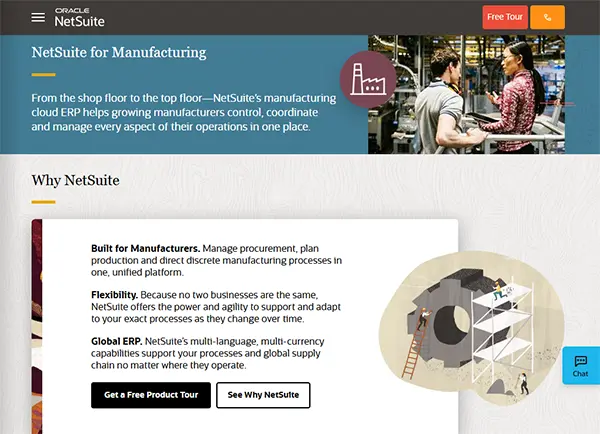
NetSuite is popularly known as a manufacturing ERP management software that helps in the full process of manufacturing products. Manage the multi-level BOMs for correct component assemblies, automate reorder points to avoid stockouts and stock shortages.
| Key Features |
|
| Pricing |
|
| Best For |
|
| Free Trial |
|
7. Katana
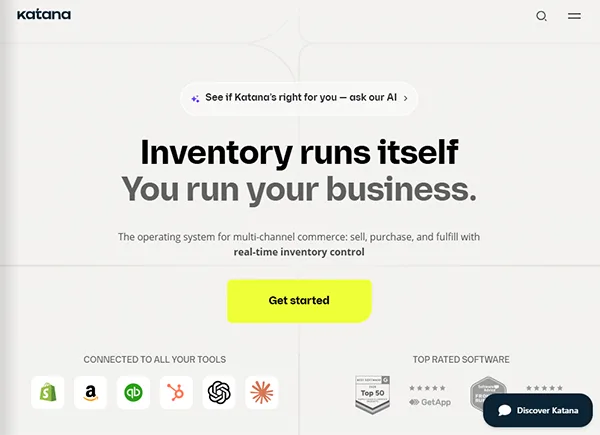
Katana is a cloud-based manufacturing inventory control software that facilitates inventory tracking for each level of production till the final product reaches the customer. It allocates resources and keeps manufacturing on time. It forecasts demand to support early product manufacturing planning decisions.
| Key Features |
|
| Pricing |
|
| Best For |
|
| Free trial |
|
8. Zoho Inventory
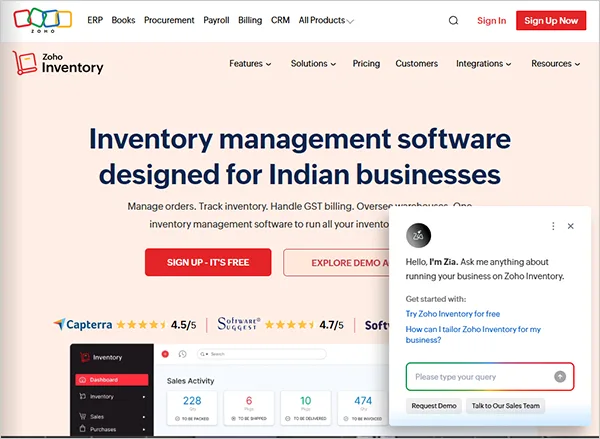
Zoho Inventory is a manufacturing and inventory management software that helps to track inventory levels, create purchase orders and product bills, facilitates demand product relocation to various warehouses, and merge orders under a single sales order to ease the order management process. It also oversees post-shipment tracking and delivery challans.
| Key Features |
|
| Best For |
|
| Pricing |
|
| Free Trial |
|
9. Unleashed
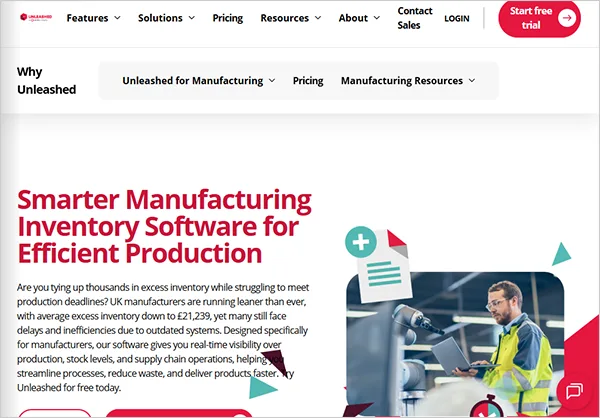
Unleashed is manufacturing inventory control software that helps the businesses in real-time stock tracking with automatic updation of inventory, creating the purchase orders with all supplier details and demand forecasts, and facilitating automated reordering. It assembles the single- and multi-level bill of materials in the cloud.
| Key Features |
|
| Best for |
|
| Pricing |
|
| Free Trial |
|
10. Ordoro
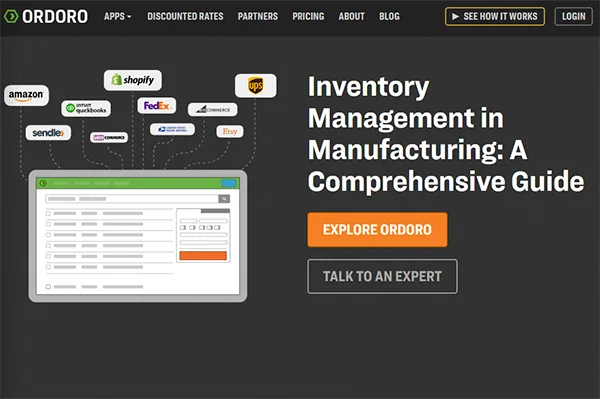
Ordoro is an inventory manufacturing software that tracks inventory across various warehouses, manages the bill of materials, and provides low stock alerts. It facilitates order routing and automated inventory uploads and provides data insights in the form of detailed reports.
| Key Features |
|
| Best for |
|
| Pricing |
|
| Free trial |
|
11. Sortly
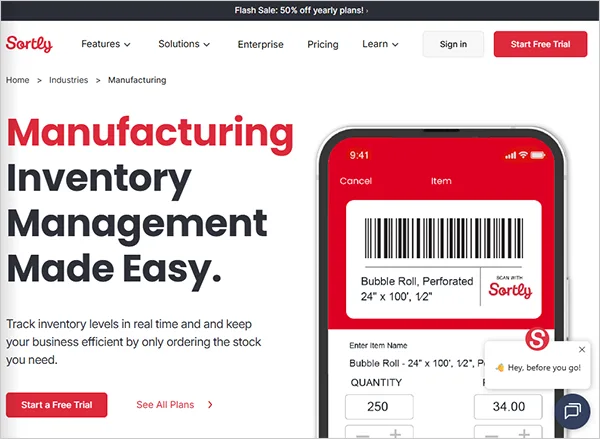
Sortly is a manufacturing and inventory software that helps to track and customize inventory by using the uploaded item photos and barcodes, manages the BOM, and reorders items according to need to avoid stockouts. It facilitates customizable reports, creates a pick list to grab the right item, and makes a purchase order using inventory details.
| Key Features |
|
| Best for |
|
| Pricing |
|
| Free Trial |
|
Also read: 10 Best Onboarding Software to Simplify New Hire Management
Benefits of Inventory Manufacturing Software
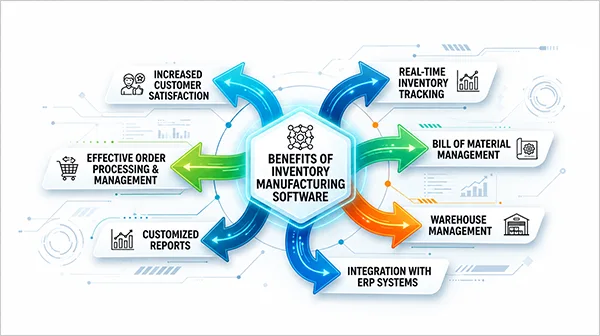
Inventory manufacturing software is beneficial for manufacturing businesses, as it optimizes inventory levels, which leads to cost savings. It helps to reduce manual errors on spreadsheets, automate most of the calculations, and prevent data loss. Here are some of the key benefits of inventory manufacturing software.
1. Real-Time Inventory Tracking
The software provides accurate and up-to-date data on stock, raw materials, and finished goods across various locations or warehouses for every designated department, which ensures transparency and accessibility of information. Real-time visibility ensures no product delays/raw material shortages/overstocking.
2. Bill of Material Management
Bill of materials is an essential component in manufacturing. It consists of the components, parts, and assemblies needed to make a finished product. The software links the product parts or components to the inventory levels, which helps to automatically deduct the current raw materials from the list and reorder new stock.
3. Warehouse Management
You can track your stock at any location or warehouse using a single software. The software also helps in transferring the stock between multiple locations. It also guides the company staff to put the large product range in the most suitable place/warehouse, along with the best routing, picking, and dropping suggestions.
4. Integration with ERP systems
Modern manufacturing and inventory management software integrates with ERP (Enterprise Resource Planning) systems through API (Application Programming Interfaces). The integration allows stock data to move within systems, preventing data silos and manual data entry mistakes in spreadsheets. Also, it speeds up the process of invoicing and auditing.
5. Customized Reports
The software converts the raw data into real-time insights and customizable reports, tracking work performance, which helps make result-driven decisions in various stages of production. Reports provide accurate and updated data by minimizing manual effort and time spent making them.
6. Effective Order Processing and Management
The inventory manufacturing software connects the customer orders directly to the warehouse and factory. When the purchase order comes in, the inventory levels are checked, and details are sent to the production or warehouse teams. The picking, packaging, and shipment process is sped up by barcode scanning and RFID (Radio Frequency Identification) tracking services.
7. Increased Customer Satisfaction
Optimized inventory management, order processing, warehouse management, and fast paced decision streamline the workflow with reduced manual errors results in improved customer experience. The business becomes credible and drives towards revenue growth.
Difference Between Inventory Management Software and Inventory Manufacturing Software
Inventory management software is for businesses that sell fully finished items or products. It tracks the inventory of finished goods, order processing, and shipment from the warehouse to the customer. On the other hand, inventory manufacturing software is for businesses that manufacture/produce the item on their own from scratch. The software tracks the raw materials/inventory levels, integrates the BOM, checks the work in progress of the production stages, and tracks packing and shipment of the finished product.
Here is the detailed difference between inventory management software and inventory manufacturing software.
| Differentiating Aspect | Inventory Management Software | Inventory Manufacturing Software |
| Used for |
|
|
| Which businesses use it |
|
|
| Bill of Materials |
|
|
| Key Features |
|
|
How to Choose the Right Manufacturing and Inventory Software?
Choosing the inventory manufacturing software is necessary to upscale and streamline the process of manufacturing for a manufacturing business. You should choose the software that can align well with your business needs, is cost-effective, has a good reputation among other businesses, and can help you achieve long-term goals.
Below is the checklist to choose the right manufacturing and inventory software.
1. Inclusion of Needed Services
Firstly, analyze your needs to determine whether you want custom services for the software that provides all the needed features, with some basic services like real-time inventory tracking, demand forecasting, warehouse management, and analytical reports.
2. Integration with Other Systems
To streamline the workflow across various platforms, the software should have integration facilities with other platforms like ERP/CRM systems, accounting software, or sales channels like Amazon, Shopify, and WooCommerce. Better integration ensures smooth data transfer and speeds up the workflow.
3. Check Software Compliance and Security
The software should meet security standards, like data encryption standards, and provide role-based access controls. It should be updated from time to time and have mandatory ISO/IEC 27001 certification for credibility.
Did You Know? ISO/IEC 27001 certification is a framework created by International Organization for Standardization (ISO) that helps organizations to secure the user information, like financial data, property records, employee records, etc., using the international best practices.
4. Cost Effectiveness
Various software options include basic and premium plans at different prices. You should choose the plan that can meet all your business needs and align with your overall budget. For small businesses, basic or free plans may work, but for large enterprises, choosing the premium or pro plans provides a better experience and operational management.
5. Behavior with Customers
You can check by taking a free trial to see how the software and its backend team respond to customer queries, whether they provide 24/7 support, whether they are active on messages, emails, or phone calls, and how much time they take to solve queries. The technical or administrative teams should be active enough to handle customer problems in real time with the best possible solutions.
Also read: Top 10 Facility Management Software For Smarter and Seamless Operations
Conclusion
Summing up! In this article, we studied the top manufacturing inventory management software, their features, pricing details, and a checklist on how to choose the best software. Inventory management software for manufacturing is a digital tool that helps the manufacturing businesses to streamline the manufacturing workflow by providing real-time stock tracking, managing bill of materials, providing accurate data insights, forecasting demands, and automating reorders.
Some of the inventory manufacturing software are Fishbowl, Cin7, InFlow, Ply, etc. For choosing the right software for your business, check for the software’s services aligned with your needs, its security compliance, customer reviews, and the cost-effectiveness of all plans.
Frequently Asked Questions
Why do businesses need manufacturing inventory management software?
What is the difference between inventory management software and inventory manufacturing software?
Inventory management software is used by businesses that deal with finished goods and sell them to customers, while manufacturing inventory management software is used by manufacturing businesses, wholesalers, or retailers who build the product from scratch using raw materials and BOMs.
What are some of the popular manufacturing inventory management systems?
Some of the popular manufacturing inventory management systems are Cin7, NetSuite, InFlow, Fishbowl, Katana, Odoo, and Unleashed. These software programs are widely known for their best services and providing customer satisfaction.
How does inventory manufacturing software work?
The customer orders are entered into the system. The system tracks the inventory; if raw materials are required, the purchase order is scheduled in the system. Production scheduling is done, work in progress is tracked, and when the finished product is ready, the inventory stock level is updated.
What is an MRP?
MRP (Material Resource Planning) means planning for the availability of the needed items/machinery/equipment to build a product at the right time without any shortage.
Source
Information security, cybersecurity and privacy protection — Information security management systems — Requirements : International Organization for Standardization (ISO)