To onboard remote employees, start with digital forms, e-signatures, and virtual training modules. Also offer a digital system, schedule video check-ins, and build a centralized resource hub.
10 Best Onboarding Software to Simplify New Hire Management
POST BY
PUBLISHED
September 3, 2026
Onboarding software is a great tool to streamline the team’s new hire process, enhancing day-one readiness and decreasing manual tasks. Every team shares the same goal: get new hires productive fast. But outdated onboarding processes slow teams down and create frustration among the new hires.
Selecting the right employee onboarding platform can change that friction into a smooth, automated experience. Read this article to discover the 10 best employee onboarding software options, the benefits of this software, and how to choose the best tool.
Table of Contents:
What is Onboarding Software?
Onboarding software is a digital platform that helps HR teams to streamline and automate the onboarding of new hires into the company. The HR software generally helps with:
- Tracking onboarding progress.
- Delivering training and documentation.
- Setting up employees (HR, payroll, and IT access).
- Compliance tracking and new hire communication.
Companies use this tool to reduce manual work and make the onboarding experience consistent. It also helps in making the new employees feel productive from day one.
Top 10 Employee Onboarding Softwares
If companies rely on manual data entry, it creates a poor first impression among new hires, which can damage employee engagement. There are many employee onboarding software options, including Workable HR, BambooHR, Deel HR, and Factorial, that can help you find the perfect solution for your specific needs.
Let’s see the top onboarding software, their pricing, features, and limitations:
1. Workable HR
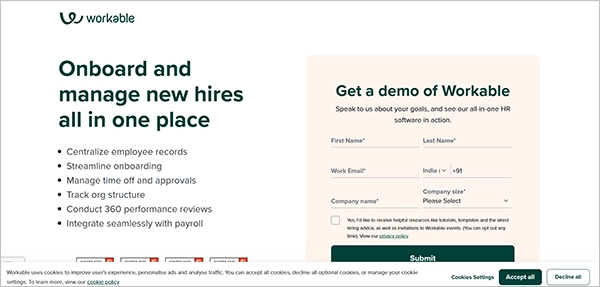
Workable is an employee onboarding tool that is designed to enhance the hiring and employee management processes for various organisations. It allows HR teams to tailor the onboarding processes based on departments and roles. This software helps provide the relevant information to the new employees from day one.
- Best for: Customizing the onboarding workflows.
- Pricing: Starts at $299 per month for its Standard plan, $599 for Premier, and $719 for Enterprise (free trial is available).
Key Features
- Offers a user-friendly portal for new hires that functions like a centralized hub.
- Eliminates the need for paperwork with e-signature collection and document management.
Limitations
- Without integrations, it can’t run payroll.
2. Justworks
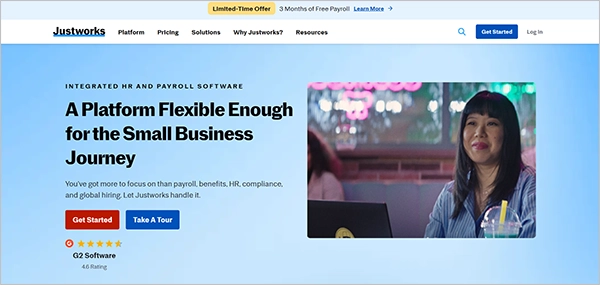
Justworks is HR onboarding software that handles automated payroll, compliance management, and benefits administration. It is an effective tool for employee onboarding in a single cloud-based system. You can also manage compliance tasks like labour law updates and tax filings from this platform.
- Best for: Small and midsize businesses that are looking to centralize HR, onboarding, and payroll on one platform.
- Pricing: Starts at only $50 a month plus $8 per employee per month (free demo is available).
Key Features
- Offers features to create and send digital offer letters directly through this platform.
- Employees can self-board on this platform by uploading their documents and completing the onboarding tasks.
- Offers easy time off tracking through PTO request management and approval on a single platform.
- Has a document e-signature feature for important documentation.
Limitations
- Has limited mobile app functionality.
- Limited native integration options with external HR tools.
3. BambooHR
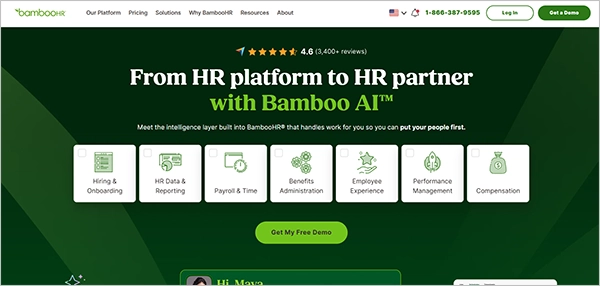
BambooHR is a go-to onboarding tool for the startup world. It minimizes manual work through a structured, repeated process. The platform offers efficient automation, which saves time and reduces errors.
You can send welcome emails, assign initial tasks, and collect e-signatures through this tool. The diverse templates make it easy to create the onboarding steps based on departments or roles, helping the new employees with the information they need.
- Best for: Startups and small businesses.
- Pricing: Starts at $10 per employee per month (free trial is available)
Key Features
- Has custom onboarding templates to build task lists according to location, department, and role.
- Features pre-boarding automation for sending forms, welcoming emails, and policy documents.
- Collects contracts, tax forms, and acknowledgements digitally through the e-signature workflows.
- Easy-to-use interface for non HR individuals.
Limitations
- Limited advanced customization for large-scale companies.
- No native onboarding analytics other than completion tracking.
4. Workday HCM
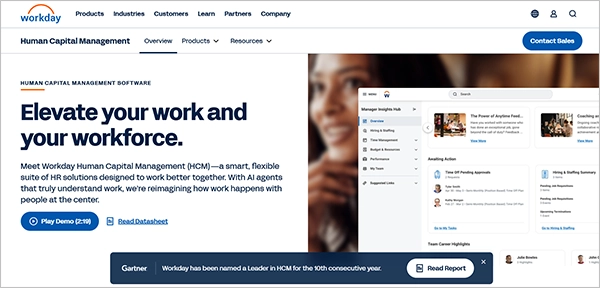
Workday offers employee onboarding solutions that are built to scale. It connects the onboarding process to the whole workforce management. As a result, working well for large-scale organisations. It reduces the need for paperwork, centralizes the welcome tasks, and efficiently guides new employees.
- Best for: Enterprises with global teams.
- Pricing: Details available on request.
Key Features
- Has pre-boarding features for sending welcome messages, sharing the relevant day-one information, and collecting the paperwork.
- Features a centralized dashboard for new employees for tracking tasks and accessing company resources.
- Offers customization to build workflows tailored to departments, locations, and roles.
Limitations
- Lack of real-time help as new employees often struggle to complete the tasks.
- Complex interface that leads to confusion among new hires.
5. Deel HR
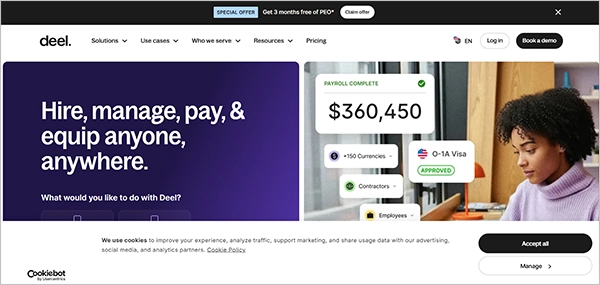
Deel HR is one of the best employee onboarding tools designed for companies that are hiring globally. It is a reliable platform to onboard employees and contractors from 100+ different countries with varied legal and employee standards.
This handles region-specific contracts, payroll syncs, and compliance documentation. It also allows the assignment of onboarding tasks, including shipping equipment, provisioning software access, and starting the background checks.
- Best for: Onboarding contractors and employees globally.
- Pricing: Starts at $5 per employee per month (free demo is available).
Key Features
- Tracking the onboarding of contractors and employees in one place.
- Has customizable templates to create locally compliant contracts.
- Collects Manages and stores the documents with an e-signature feature.
- Offers basic reporting and people records HR tools for free.
Limitations
- Complex contract templates.
- Limited customization options for some platforms.
6. Greenhouse
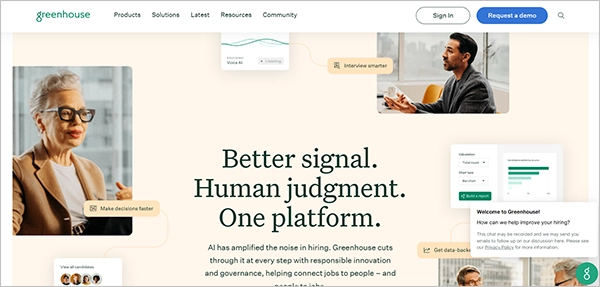
Greenhouse is an onboarding platform that bridges the gap between hiring and onboarding. It is an ideal tool for linking new hire onboarding directly with the hiring procedure. This brings structure and clarity to onboarding by helping you build plans based on status, role, and location. It eliminates the need for paperwork and helps teams assign tasks, e-signature documents, and welcome emails automatically.
- Best for: Onboarding and linking hiring.
- Pricing: Details available on request (free demo is available).
Key Features
- Automates the workflow with email reminders, generating tasks and e-signature documents according to status, location, and role.
- Offers a central resource space for new employees with team profiles, role-specific guidance, and culture intro content.
- Measurable goal tracking with 30-day milestones for new hires to track their progress.
- Features to collect real-time feedback from the new employees to reflect on the process.
Limitations
- Full data sync benefits may not apply for companies that don’t use Greenhouse Recruiting.
- Basic plans do not offer onboarding workflow features.
7. Connecteam
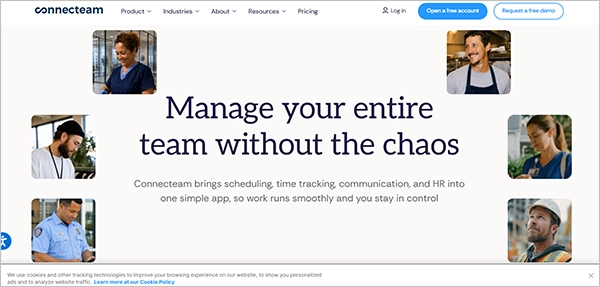
Connecteam is an automated employee onboarding software that is best for remote workers and deskless field workers. It offers effective training and course features. As an employee joins the company, its features help HR teams frame training courses for each employee to fulfil their onboarding workflow successfully. Beyond the training, it has a document feature that ensures compliance for the new hires. It is mobile-first and easy to use for all industries.
- Best for: onboarding non-desk employees.
- Pricing: starts at $29 per month (Free trial and free plan are available).
Key Features
- The platform has a social feed where HRs can warmly welcome new employees.
- Has an employee directory for users, with which they can find other employees and talk to them through the team’s chat app.
- Offers interactive knowledge quizzes to check knowledge comprehension.
Limitations
- Has a complex pricing structure.
- Limited details on integrations.
8. Factorial
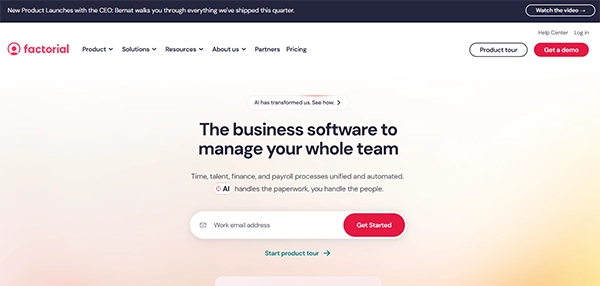
Factorial is one of the best HR onboarding tools that helps in the management of human resource processes more effectively. It offers features for time tracking, employee data management, and performance evaluation. On this platform, you can customize the workflows and manage both the onboarding and offboarding of employees. It can also store employee documents, making it easy to update and access the records.
- Best for: Management of onboarding and offboarding on a single platform.
- Pricing: Starts at $8 per month per user (free demo is available).
Key Features
- Performance review tools that allow regular progress tracking and feedback.
- Has a time-tracking function for easy management of hours worked and attendance.
- Features document management for better organization of paperwork, contracts, and forms.
Limitations
- An extensive range of features is not required for small businesses.
- Integrations may need additional setup with some systems.
9. Docebo
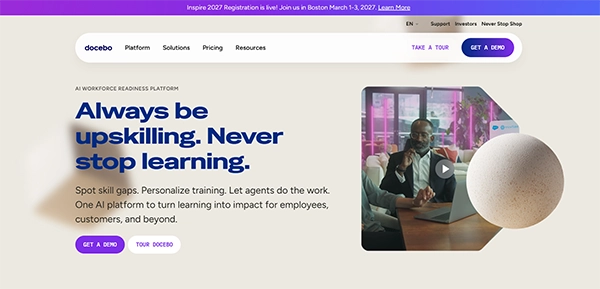
Docebo is one of the best onboarding tools that helps establish a smooth and engaging process. It is especially beneficial for companies that have dedicated L&D teams. This is an AI learning program that offers high flexibility, scalability, and personalized learning.
- Best for: Enterprises having large-scale onboarding programs.
- Pricing: Details available on request.
Key Features
- Offers integrations with payroll, HRIS, and productivity tools.
- Supports multiple languages and white-labeling for global deployment.
- Features AI-driven learning recommendations that provide relevant content based on roles and skills gaps whenever the learner requires it.
Limitations
- Complex initial setup and configuration for new users.
- Limited mobile app functionality.
10. Rippling
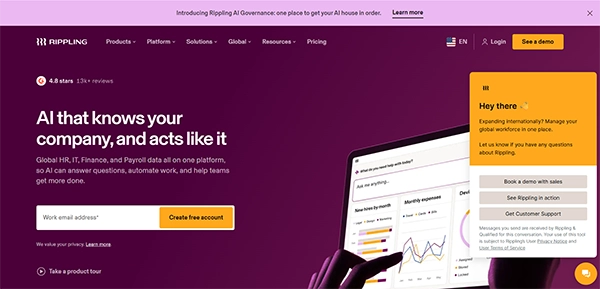
Rippling automates the workflows from payroll to device setup. It makes it ideal for companies that have heavy lifting in onboarding, focusing on device management and operational efficiency. This platform minimizes the admin effort by assigning tasks and syncing systems. Therefore, it is ideal software for fast-growing companies that have complex hardware and software provisioning needs.
- Best for: Managing HR, IT, and payroll on a single platform.
- Pricing: $8 per user/month (demo is available).
Key Features
- Easy one-click onboarding across IT, payroll, and the company’s directories.
- Offers customized tasks, training videos, and manager reminders based on department and location.
- Runs background checks, collects digital tax forms, and verifies local right-to-work documents.
Limitations
- While the global support is expanding, local compliance depth differs outside major markets.
- High level of customization makes initial configuration time-consuming.
Next Read: 10 Best Change Management Software in 2026: Top Tools, Features & Pricing
Benefits of Onboarding Software
Onboarding management software is designed to help new hires settle into their roles easily. It reduces the administrative workload and automates compliance management. This tool is also time-efficient, enhancing the productivity of new employees.
- Improved engagement of new hires: This workflow management software helps new hires feel welcomed from day one and boosts their morale and job satisfaction. It facilitates personalized and interactive learning paths, reduces first-day anxiety, and builds long-term loyalty.
- Reduced administrative workload: It eliminates the hours of manual work for HRs and managers through IT provisioning, automating the checklists and e-signatures.
- Automated tax and compliance management: These tools collect and store required federal and state forms automatically, such as W-4s and I-9s. This ensures that all the regulatory filings are complete on time and saves businesses from compliance penalties.
- Faster time to productivity: By providing easy access to essential resources and structured training modules, this talent management software helps new hires quickly learn their roles and responsibilities. This reduces the time to learn and settle into their roles, contributing to their teams.
How to Choose the Best Onboarding Software?
To choose the right onboarding software, focus on selecting the system that automates manual tasks, ensures regulatory compliance, and fosters an engaging experience for new hires.
Let’s see the key factors to evaluate for choosing the best onboarding software:
- Employee engagement: Select the platform that has interactive elements, progress tracking, and welcome videos that enhance engagement among the new employees.
- Customization options: The best onboarding software has customization options to suit the processes of different organisations. Select the tool that has onboarding checklists, policy acknowledgements, and multimedia content.
- Automation features: The right platform has automation that decreases the administrative workload on repetitive tasks. It sends reminders, collects e-signatures, updates records, and tracks task completion.
- Mobile or multi-location support: It is mobile accessible to make it easy to use for remote and hybrid employees. This can be logged in from different devices and locations so that distributed teams can access the onboarding tasks from anywhere, anytime.
- Industry-specific compliance: The best onboarding software should help organisations stay regulatory compliant automatically. Whether it is GDPR, HIPAA, SOC 2, or local labour laws, it makes the documentation easier.
- Role-based permissions: This allows role-based permissions to protect personal employee information while empowering stakeholders with the required level of visibility.
Also Explore: 20 Best Sales Forecasting Software to Improve Revenue Planning in 2026
Final Thoughts
Onboarding software is an excellent tool that helps HR teams design onboarding programs that actually work. Platforms like Greenhouse, Factorial, Rippling, and Docebo streamline building, managing, and scaling onboarding to provide new employees a great start. Whether you are a small business or a large-scale organisation, the above-mentioned list has the tools that will work for you.
FAQs
How do I onboard remote employees effectively?
How can you digitize and automate HR onboarding?
Select the software that successfully automates the offer letters, e-signatures, training reminders, and policy distribution. It reduces delays and errors for the team.
What is the typical learning curve for new hire onboarding software?
Most modern onboarding platforms are designed to be user-friendly, with step-by-step workflows and intuitive dashboards. Usually, HR teams can run it within a few hours with built-in tutorials. The biggest learning curve is observed in the integrations and custom workflow setups.
Do software onboarding tools offer analytics or reporting features?
Yes! Most platforms offer reporting features for tracking completion rates, new employee engagement scores, and time to productivity.
How can new employee onboarding tools help new hires build personal connections?
Many platforms encourage networking with interactive org charts, welcome task lists, and a built-in buddy system. Some of the tools also automate the intros to mentors and colleagues and integrate with chat apps.
Sources:
10 Best Onboarding Software – Forbes