A talent management software is an integrated HR platform that manages the employee lifecycle by focusing on hiring, engaging, and retaining employees to align workforce capabilities and goals with those of the business organisation.
Top 12 Talent Management Software to Streamline Hiring and Employee Development
POST BY
PUBLISHED
July 1, 2026
As per the Society of Human Resource Management (SHRM), it was found that over 70% of the organizations still face challenges recruiting full-time positions, which projects the dire need to adopt a talent management software that attracts and retains the top talent across the globe.
By streamlining recruitment, onboarding, learning, performance management, succession planning, and employee engagement in a centralised platform, an efficient TMS optimizes every stage of the employee lifecycle.
Hence, the result is a productive workforce, stronger retention, and a streamlined approach to managing talent that benefits both the employees and the organization. This article covers the top 12 talent management platforms, such as Bamboo HR, Deel, Greenhouse, Rippling, ClearCo, and more, along with benefits, pricing details, and the factors to consider.
Table of Contents:
- What is Talent Management Software? Benefits of Using Talent Management Tools
- Top 5 Talent Management Software for Faster and Efficient Workflow
- An Extended List of the Best 7 Talent Management Software Worth Considering
- Key Features that Define an Effective Talent Management Software
- The Bottom Line
- Frequently Asked Questions (FAQs)
What is Talent Management Software? Benefits of Using Talent Management Tools
According to the Chartered Institute of Personnel and Development (CIPD), talent management refers to a “systematic attraction, identification, development, engagement, retention, and deployment of those individuals who are valuable to an organisation, because of their potential”. Hence, talent management software integrates every stage of the employee lifecycle in one platform that fuels business performance.
In simpler words, a talent management software is an integrated HR platform that manages the employee lifecycle by focusing on hiring, engaging, and retaining employees to align workforce capabilities and goals with those of the business organisation.
Therefore, the basic job of a talent management platform is to:
- Attracts the top talent with the best employer branding, job posting integrations, applicant tracking, and candidate selection.
- Onboards new employees with structured training programs and task assignments.
- Regularly monitor performance through KPIs and feedback.
- Identifies the skill gap and hosts learning and development programs (L&D), certifications, and skill-building initiatives.
- Retains the top talent and high-performing employees while ensuring career planning to prepare the workforce for future leadership roles.
What are the Benefits of Using Talent Management Tools
A talent management software helps the HR teams to retain and engage the employees, offers advanced analytics and data-driven insights, creates a productive workforce, and ensures better succession planning.
Here are the benefits of top talent management systems:
- Eliminate the Skill Gap Through Learning and Management: According to LinkedIn’s Workplace Learning Report 2024, organizations with stronger learning cultures experience 57% higher employee retention rates. Hence, by identifying the skill gaps and addressing them through targeted and personalised training, organizations can prepare the workforce for future leadership.
- Better Succession Planning: A TMS identifies the high-potential candidates with management capabilities and prepares them for future leadership roles. By identifying the strengths, mapping skills, and identifying the areas requiring improvement, HRs can create a structured way of transferring information.
- Better Onboarding Experience: Onboarding is a crucial part of talent management, and hence, by automating the manual tasks, a talent management system streamlines the hiring process, enhancing the candidate’s experience.
- Offers Data-Backed Insights: Advanced analytics and reporting give HR teams visibility into workforce trends, skill gaps, turnover risks, and performance metrics.
Top 5 Talent Management Software for Faster and Efficient Workflow
The top 5 talent management software companies include BambooHR, Deel, Rippling, Clear Co, and Sloneek.
Here’s everything you need to know:
1. BambooHR
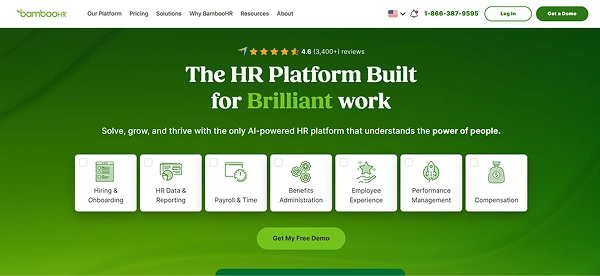
With over 150+ HR and payroll integrations, BambooHR is one of the best talent management software and HR software solutions that combine applicant management, hiring and onboarding, employee payroll records, and performance management, all in one platform.
Trusted by 30,000+ businesses, from startups to enterprises, and by popular names such as OpenAI, Harvard Medical School, Quora, and more, this platform is highlighted by its intuitiveness and minimal training requirements.
Best For: Mid-Sized Businesses looking for a comprehensive platform.
| Pricing Details | Book a Demo to Get a Custom Quote |
Key Features of Bamboo HR:
- Robust candidate pipeline management and performance management by assigning tasks and tracking the progress of new hires.
- Features a self-service portal that allows candidates to share personal information, access documents, schedule an interview, and request leave.
- Offers an intuitive mobile app, and there is no annual contract; users can pay per month.
Downsides to Consider:
- The payroll feature is available in certain regions only.
- The reporting dashboard has limited features.
2. Clear Co.
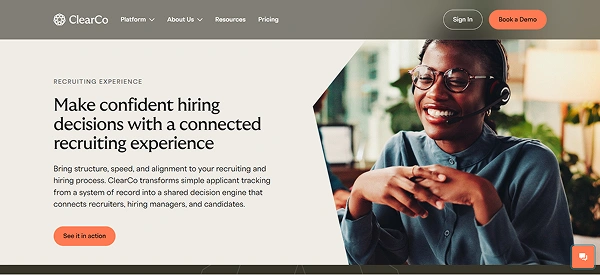
Clear Co is one of the best talent management software solutions ideal for mid-sized to enterprise HR teams that manage the full talent lifecycle from talent acquisition to employee retention and engagement. The standout feature of this platform is its built-in AI feature that supports smarter hiring decisions, identifies skill gaps, and offers personalised learning paths, while also enabling smooth integrations with HR and enterprise tools.
| Pricing Details | Book a Demo to Get a Custom Quote |
Key Features of Clear Co:
- Regularly monitor employee engagement and satisfaction through regular employee pulse surveys.
- Automates creating and sending offer letters with a built-in signature feature, and collaborating across all stages.
- Features a standardized hiring process by assessing candidates through scorecards and guides.
Downsides to Consider:
- May not be ideal for smaller organizations.
- Initial implementation can be complex.
3. Rippling
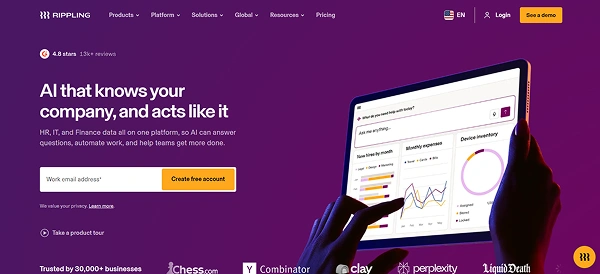
Next on the list of the best talent management platforms is Rippling, which is also the best contractor management software. It is known for its seamless automated onboarding and offboarding workflows, payments, and benefit administration. The best part about this platform is that it serves as a centralised platform for all the organisation’s needs, including HR, payroll, IT, Finance, and even implements global talent management.
| Pricing Details | Book a Demo to Get a Custom Quote |
Key Features of Rippling:
- Strong automation and smart integration with multiple job boards with a single click.
- Offers global hiring and compliance support with a user-friendly mobile app and intuitive interface.
- Centralised employee management delivers templates and powerful insights for decision-making.
Downsides to Consider:
- Initial setup can be complex for new users.
- The talent management feature is less advanced than that of the competitors.
4. Deel
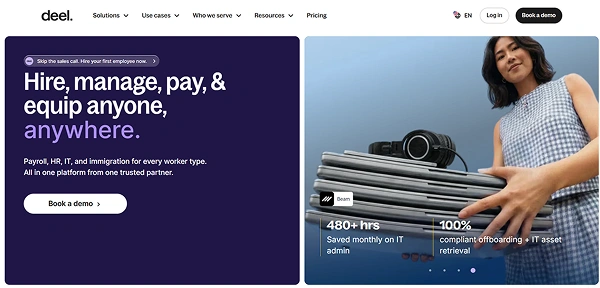
Deel is yet another top talent management software and asset management software that features over a million contracts and full-time workers as a result of partnerships with over 35,000+ countries. Ideal for small enterprises, it supports global hiring and compliance all in one place and also offers AI-assisted CV-to-Job matching that reduces manual efforts and automates filtering candidates. Deel also facilitates candidates requiring a work visa sponsorship and application process across 70+ countries.
| Pricing Details |
|
Key Features of Deel:
- Features a multi-currency payment option and supports global payroll and compliance management.
- Verifies the worker’s identity and automatically runs the background checks.
- Allows anonymous reporting, robust workforce planning, identifies skill gaps, and builds a learning path in one platform.
Downsides to Consider:
- Fewer third-party integrations as compared to competitors.
- Candidate sourcing tools are limited.
5. Sloneek
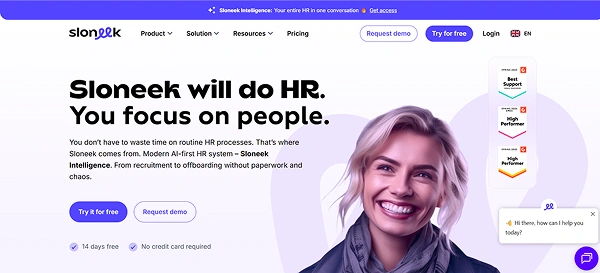
Sloneek is one of the best talent management software solutions, ideal for small to mid-sized companies. The best part about this platform is its smooth integrations with Slack, OpenAI, Microsoft SSO, and more, along with seamless onboarding that offers a document and equipment checklist and the training module for the new joinee.
| Pricing Details | Book a Demo to Get a Custom Quote 14-Day Free Trial Available |
Key Features of Sloneek:
- Features robust asset management by continuously regulating and monitoring the assets with each employee.
- It not only tracks working hours and overtime but also project-based time with built-in reporting tools.
- Keeps employee records centralised and ensures smart leave management.
Downsides to Consider:
- Mobile apps can be unintuitive.
- Reporting and customization features are limited.
An Extended List of the Best 7 Talent Management Software Worth Considering
Here’s an extended list of the best 7 talent management software that you should consider for efficient workforce management in an organisation:
| S No. | Talent Management Software | Key Features | Price Details |
| 1. | HiBob |
| Request a Demo to Get a Custom Quote |
| 2. | Greenhouse |
| Request a Demo to Get a Custom Quote |
| 3. | Lattice |
|
*Allow users to create a custom package. |
| 4. | UKG Pro |
| Book a Demo to Get a Custom Quote |
| 5. | PerformYard |
| Start at $5-$10 per user per month. |
| 6. | RemoFirst |
| Book a Demo to Get a Custom Quote |
| 7. | SAP SuccessFactors |
| Book a Demo to Get a Custom Quote |
Key Features that Define an Effective Talent Management Software
A robust applicant tracking system, learning and management software, advanced analytics and reporting, AI-driven talent management, and an employee engagement tool are some of the must-have features for effective talent management software.
Here’s everything you need to know:
- Applicant Tracking System (ATS): A robust ATS enables HRs to streamline hiring by identifying top talent and creating a better experience for candidates. It should:
- Post job roles across multiple job boards.
- AI-driven candidate selection and background checks.
- Screen resume and run background checks.
- Complete digital onboarding.
- Learning Management System (LMS): A talent management software must identify the skill gaps and deliver training programs. It should:
- Support long-term development and skill building
- Offer certification and skill-based programs
- Course management
- Track progress
- AI-Powered Talent Management: By automating repetitive HR tasks, robust talent management tools allow teams to prioritize high-stakes tasks. It:
- Eliminates error
- Offers a standardized hiring process to remove bias.
- Improve sourcing and outreach
- Automates resume screening and interview scheduling.
- Employee Engagement Tools: Monitoring and improving employee satisfaction can significantly improve their productivity and retention. It should:
- Conduct Pulse Surveys
- Feedback Collection and Anonymous Reporting
- Action Planning
- Engagement Analytics
- Advanced Analytics and Reporting: Research and analytics-backed reports enable the teams to make informed decisions. It helps:
- Identify Improvement Opportunities
- Turnover and Retention Analysis
- Workforce Analytics Dashboard
- Custom Reports
Suggested Reading: Top 10 Facility Management Software: Features, Pros & Cons
The Bottom Line
In a nutshell, talent management software is more than just an HR tool. It brings together recruitment, onboarding, learning, performance management, employee engagement, and succession planning, all in a centralised platform. However, it is important to invest in the right software that enhances workforce efficiency and streamlines HR operations. Always look for features such as a robust applicant tracking system, learning and development software, and more.
Frequently Asked Questions (FAQs)
What does a talent management software do?
What are some of the best talent management software in 2026?
BambooHR, Greenhouse, Rippling, UKG Pro, Deel, Workable, and more are some of the best talent management software worth considering in 2026. This software ensures smarter talent management for organisation or every size and goals.
What are the key features of talent management software?
A robust applicant tracking system, learning and management software, advanced analytics and reporting, AI-driven talent management, and an employee engagement tool are some of the must-have features for effective talent management software.
How is talent management software different from HRMS?
While an HRMS focuses entirely on HR functions, including HR management, payroll, benefit administration, and employee records, talent management software focuses on recruiting, performance management, engagement, succession planning, and employee retention and development.
Does talent management software include an ATS?
Yes, many talent management systems include an Applicant Tracking System (ATS) to streamline recruitment, onboarding, and hiring a potential candidate.
Sources:
2025 Talent Trends: SHRM Organisation