Ans: Blue Yonder Warehouse Management, Oracle Warehouse Management Cloud (Oracle WMS), and Manhattan Active WMS are ideal software for large-scale organisations. However, for startups and mid-sized firms, NetSuite WMS, Fishbowl, and Zoho Inventory work best.
10 Best Warehouse Management Software to Boost Efficiency, Accuracy, and Growth
POST BY
PUBLISHED
April 27, 2026
The warehouse management software is a crucial component for ensuring inventory accuracy, cost-effective operations, and improving order fulfillment speed.
As it is an advanced platform that manages day-to-day operations within a warehouse, your business can transform how it functions through live visibility, automation, and data-driven insights.
However, selecting the right warehouse inventory management software can be challenging. You can refer to our detailed guide, where we have mentioned the 10 best solutions that will help in streamlining workflows.
Table of Contents:
- What is Warehouse Management Software and Why is it Important for Modern Businesses?
- Top 5 Warehouse Management System Software for Better Optimisation of Daily Operations
- 5 Additional Warehouse Management Software for Real-Time Inventory Accuracy
- What are the Key Features to Consider While Selecting Warehouse Inventory Management Software?
- Wrapping Up
- FAQs
What is Warehouse Management Software and Why is it Important for Modern Businesses?
The warehouse management software refers to the structured system or solution that assists firms in managing, configuring, and optimising warehouse operations and distribution centers. It helps streamline the efficiency of a single inventory location or multiple storage locations of businesses.
From real-time tracking of inventory to reporting and analytics, a warehouse management system software ensures facilitation of daily operations from inbound storage to final order dispatch.
- Live Tracking of Inventory With Significant Accuracy and Reduced Errors: Whether you have a B2B SaaS firm or an e-commerce business, a warehouse mgmt software removes the risk of stock inconsistencies.
With sensors, barcodes, and RFID, you can monitor your warehouses in real-time.
- Better Vendor Management and Order Fulfillment: It serves the purpose of vendor management software as well through the optimisation of purchase orders and advanced shipping notices. It also streamlines vendor-managed inventory and monitors the performance of suppliers.
- Lower Operating Costs with Improved Workforce Management: You can achieve lower labor costs and mitigate costly compliance errors with efficient warehouse software. It also delivers optimal tools to measure staff productivity and helps assign tasks based on priority.
- Seamless Integration with Other Systems and Comprehensive Automation Features: Several prominent platforms offer simplified integration with ERP and CRM software to facilitate better efficiency and accuracy. With the use of advanced AI tools, it delivers automated picking systems for better shipping and order delivery.
Also Read: Top 25 Powerful Event Management Software for Seamless Event Execution
Top 5 Warehouse Management System Software for Better Optimisation of Daily Operations
From Blue Yonder Warehouse Management software to NetSuite WMS, here are our top 5 recommendations for cutting-edge and feature-packed warehouse mgmt software.
1. Blue Yonder Warehouse Management
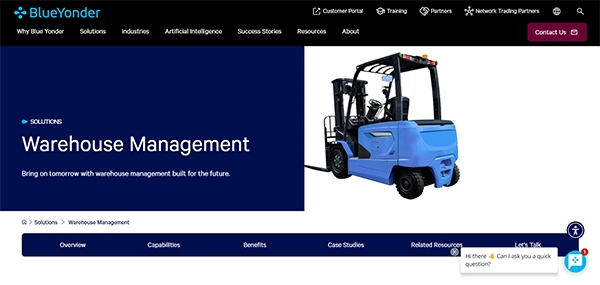
From large-scale organisations to startups and mid-scale firms with AI and machine-learning driven operations. It is a comprehensive solution designed for the entire warehouse lifecycle, from inbound processing to final shipping.
Why Blue Yonder Warehouse Management is Worth Considering:
- Its advanced AI tools automatically suggest further actions on inventory restocking, labor allocation, and stock balancing.
- Offers real-time inventory monitoring and easily tracks lot numbers, batch numbers, and expiry dates.
- As it is developed on a modern SaaS cloud platform, you can easily scale operations and manage multiple warehouses, global operations, and high transaction volumes.
What are the Drawbacks to Consider:
- The upfront costs of licensing and subscription are very high for small and mid-sized businesses.
- Requires a steep learning curve to operate.
2. NetSuite WMS
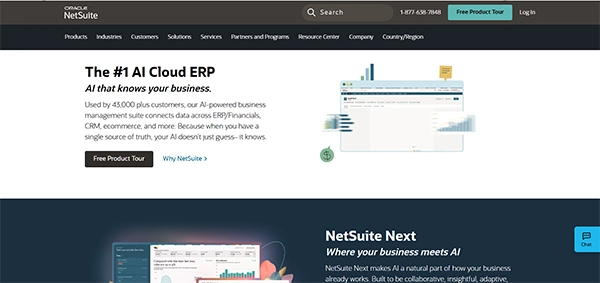
As NetSuite WMS is built into the NetSuite ERP platform, this trusted solution easily manages your inventory, orders, finance, and warehouse data. It supports live tracking of inventory and transaction updates, and stocks are updated instantly without hassle.
Why NetSuite WMS is Worth Considering:
- NetSuite WMS has a mobile-first design that scans incoming goods directly against the purchase order.
- It has an exclusive feature where you can make decisions depending on item weight, size, and movement frequency.
- The smart count feature schedules counting without disrupting the operations, along with providing intuitive dashboards with KPIs.
What are the Drawbacks to Consider:
- Compared to the other enterprise warehouse inventory software programs, NetSuite WMS lacks advanced features.
- For large-scale organisations with complex warehouses, you might face functional gaps.
3. SAP ERP Warehouse Management (Legacy)
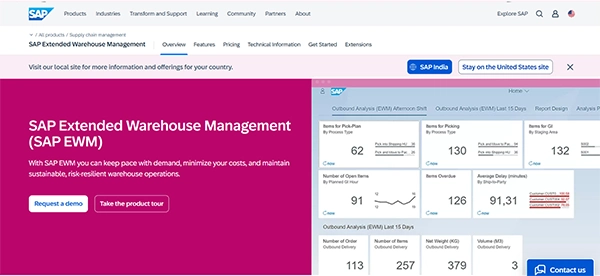
While SAP has a long-standing reputation and trust of users for ERP software, its warehouse optimization software easily performs materials management, sales, distribution, and production planning.
Why SAP ERP Warehouse Management (Legacy) is Worth Considering:
- Delivers optimal data consistency and ensures each warehouse movement is automatically shown in the inventory, along with financial records.
- The transfer orders and bin-level granularity tracking support a structured warehouse environment.
- Its system helps you decide the ideal storage location based on rules with a fixed bin strategy and a near picking area.
What are the Drawbacks to Consider:
- You will have limited AI and ML functionalities compared to other warehouse management programs.
- It has a complex setup and maintenance process.
4. Fishbowl Warehouse
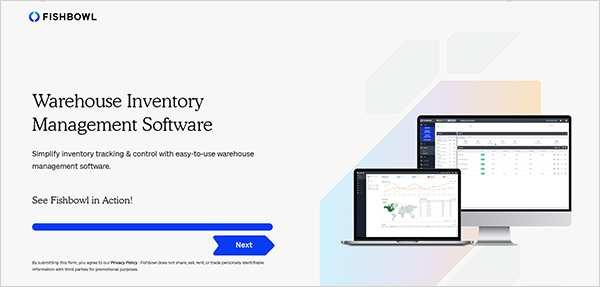
Fishbowl Warehouse is another leading recommendation for an advanced and reliable warehouse management software. With order management and fulfillment features, it is also easy to use and implement.
Why Fishbowl Warehouse is Worth Considering:
- It easily integrates with QuickBooks and syncs sales and purchase orders, along with inventory and financial details.
- Fishbowl is a comprehensive software that lowers manual errors and enhances operational efficiency through barcode scanning and automation.
- It’s designed for small-scale to mid-sized firms with a beginner-friendly interface and cost-effective pricing.
What are the Drawbacks to Consider:
- The Fishbowl Warehouse is not ideal for large enterprises with high order volumes.
- Lacks advanced reporting tools and customisation options.
5. Oracle Warehouse Management Cloud (Oracle WMS)
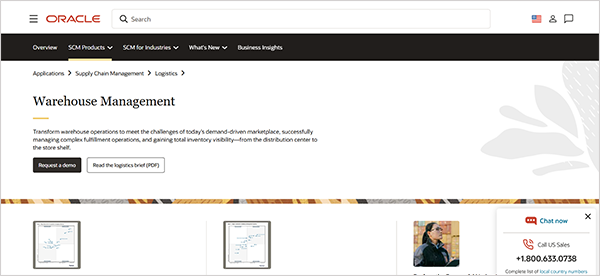
The Oracle Warehouse Management Cloud (Oracle WMS) is built completely on the SaaS model and doesn’t require on-premise servers. It also covers the complete warehouse lifecycle from storage placement to packing and shipping.
Why Oracle Warehouse Management Cloud is Worth Considering:
- This is a full-featured platform that easily scales with your business growth.
- Like a compliance management software, Oracle WMS automates regulatory obligations and maintains detailed audit trails.
- It seamlessly integrates with the Oracle ecosystem and provides dashboards and analytics for order fulfillment rates and labor efficiency.
What are the Drawbacks to Consider:
- The Oracle Warehouse Management Cloud has a premium pricing model and requires significant upfront implementation costs.
- You might have to face downtime concerns while updating your system and scaling your business operations.
Also Read: What is Sparkpressfusion com? Understand its Features, Benefits and How it Drives Digital Growth
5 Additional Warehouse Management Software for Real-Time Inventory Accuracy
Beyond the top 5 suggestions, check out these 5 additional warehouse inventory software programs that will assist in better decision-making and enhanced labor productivity.
| S. No. | Warehouse Management Software | Pros | Cons | Ideal For |
| 1. | Manhattan Active WMS |
|
| Large-scale enterprises |
| 2. | Logiwa WMS |
|
| Small to mid-sized businesses |
| 3. | Infor WMS |
|
| Mid-sized to large-scale enterprises |
| 4. | Digit |
|
| Startups and small-scale businesses |
| 5. | Zoho Inventory |
|
| Small-scale to mid-sized firms |
Also Read: What Is Follett Software Inbound Marketing Pipeline Conversion SDR Workflow?
What are the Key Features to Consider While Selecting Warehouse Inventory Management Software?
It’s important to begin by identifying the right type of warehouse management software that delivers order management and fulfillment features. Also, check for barcode and RFID scanning support for improved accuracy. Beyond these, explore the key features to consider while selecting the ideal software.
- Check for Order Management and Fulfillment Features: Opt for a platform that can easily manage the entire order lifecycle and provides support for different picking methods, including batch picking and zone picking.
- Select the Ideal Platform from Various Types of WMS Software: Make sure you choose the software from the standalone, cloud-based WMS, integrated ERP systems, and supply chain modules based on your business warehouse and operations needs.
- Real-time Inventory Tracking and Barcode Support: The WMS software must provide live visibility across warehouses, bins, and shelves. Also, the platform must enable accurate data entry through barcode scanning and RFID technology.
- Efficient Management of Inbound and Outbound Process: Ensure that you purchase the software that can effectively manage receiving goods, putaway, and handle outbound shipping tasks.
Wrapping Up
Blue Yonder Warehouse Management, NetSuite WMSM, and SAP ERP Warehouse Management (Legacy) are our leading suggestions for dependable and proven warehouse management software.
However, if you are looking for a cost-effective platform that suits the requirements of startups and small–scale firms, we recommend opting for Fishbowl, Zoho Inventory, or Logiwa WMS. With real-time inventory tracking and efficient labor management, it also offers order accuracy and builds user credibility.
FAQs
Q. Which is the best warehouse management system application?
Q. What are the four types of warehouse management programs?
Ans: Standalone WMS, Enterprise Resource Planning (ERP) module-based WMS, cloud-based WMS, and Supply Chain Management (SCM module-based WMS are the four primary types of warehouse mgmt software.
Q. What are the benefits of using warehouse inventory software programs?
Ans: These comprehensive platforms contribute to enhanced operational efficiency, lower storage costs, better workforce management, real-time inventory tracking, and compliance with legal obligations.