Ans: Coupa, SAP Ariba, Beeline, and Medius are some of the vendor management platforms that work well for medium- to large-sized enterprises with complex vendor relations.
Top 18 Vendor Management Software for Automated Workflow in 2026
POST BY
PUBLISHED
April 17, 2026
Vendor Management is a strategic approach employed by companies that helps with sourcing, onboarding, and managing vendors. With advanced analytics, predictive AI, and automated workflow, vendor management software enforces data-driven decisions that reduce risks and build strong vendor partnerships.
This article covers tried and tested top 18 vendor management software, which includes Coupa, Medius, SAP Ariba, Basware, Gatekeeper, and Tipalti, to name a few. Along with the benefits of VMS, learn what the important factors are to consider while selecting the software.
Table of Contents:
What is Vendor Management Software?
A vendor management software is a cloud-based platform that sources and oversees the external workers, also known as vendors. Vendors are the suppliers of the goods and services required for day-to-day operations.
Hence, this structured program enables businesses to track vendor performance, manage compliance, control costs, and source suitable vendors for the businesses. In short, it centralizes the entire lifecycle of the vendor relationship.
Top 10 Vendor Management Software in 2026
The top vendor management software includes Coupa for spending and sourcing optimization, Beeline for effective talent pool management, and SAP Ariba for its strategic vendor sourcing. Other VMS like Medius, Gatekeeper, Procurify, and more are known for their performance tracking and risk management.
Here’s everything you need to know about the vendor management system:
1. Tipalti
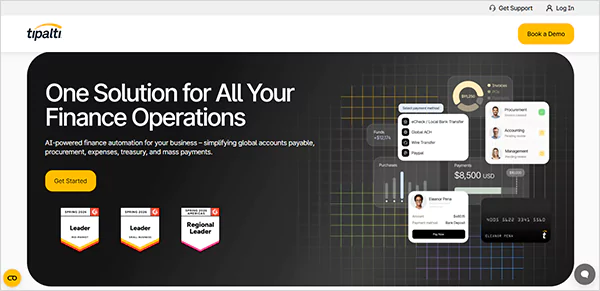
Tipalti is a one-stop destination for all financial operations, including expense management, streamlined mass payments, and automating time-consuming payable tasks. Known for automating vendor payments, Tipalti ensures compliance management and tackles the entire supplier payments operation by automating payments and tracking vendor performance.
Best For: Medium to large businesses dealing with global payments.
Key Features:
- Automates the mass payments to global vendors. It has streamlined payouts to 200+ countries and territories in 120 currencies.
- Streamlining the payments by reviewing, approving, reconciling, and reimbursing all at one platform.
- Supplier onboarding and real-time integration with Enterprise Resource Planning (ERP) and CRM software like NetSuite, Xero, QuickBooks, and more.
| Pros | Cons |
| Multiple payment options like wire transfers, PayPal, prepaid virtual cards, and eChecks. | A sudden glitch in currency conversion affecting the global payments. |
| Early fraud detection and risk controls from unauthorized transactions. | Limited customization options. |
| Automated forecasting and real-time global payment visibility. |
Pricing Details: $129 per month. No free versions are available.
2. SAP Ariba
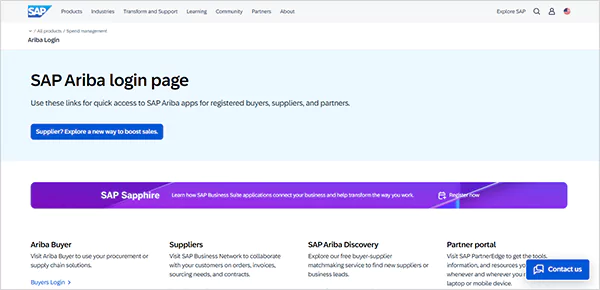
SAP Ariba is a leading cloud-based procurement and vendor management system software that unites critical business operations like finance, supply chain, procurement, and more. The standout feature of SAP Ariba is its ability to enable an easy search for vendors based on specific industry or service needs with the SAP Business Network Discovery.
Key Features:
- Enables AI-generated recommendations and compares the best-suited suppliers and bids.
- Invites the strategic vendors in sourcing events to share data and proprietary information in a secure environment.
- Provides visibility into spending and offers data-driven insights to maximize savings.
| Pros | Cons |
| Allows businesses to conduct online auctions and analyse bids using AI to optimize rewards. | Limited customization |
| Manages and stores contracts digitally and automates the renewals. | Complex implementation and UI are not user-friendly. |
| Identify the bottlenecks through advanced analytics. |
Pricing Details: Pricing structure details are available on request.
3. Coupa
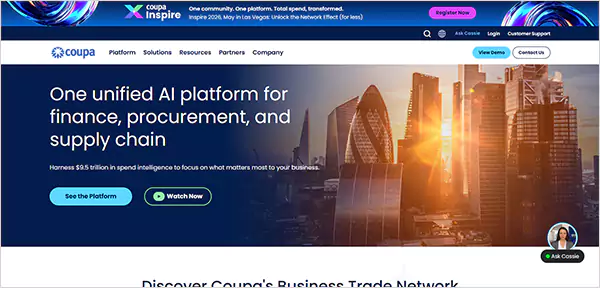
Coupa is a cloud-based vendor management software that ensures robust supply chain models with machine learning and GenAI tools. It facilitates vendor onboarding, performance tracking, and continuously monitors the spending patterns to maximize savings. This VMS enables the organization to track the contract terms and compliance to prevent legal risks and penalties.
Key Features:
- Supports sourcing events such as auctions and RFPs for vendor selection.
- Analyses vendor performance and financial standards to prevent risks.
- Automates order generation, approval, and distribution.
| Pros | Cons |
| Visibility into company-wide spending and compliance. | Slow software performance as a result of high data volume. |
| User-friendly interface | Complex and extensive features. |
| Offers a mobile app to manage tasks and approvals anywhere. |
Pricing Details:
- Verified: $549 per year
- Premium: $499 per year
- Advanced: $4800 per year
4. Jaggaer
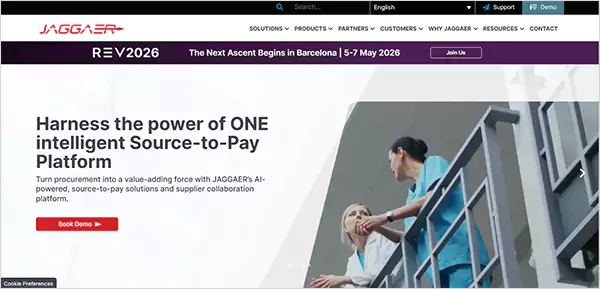
Jaggaer is a perfect solution for mid-sized to enterprise-level companies, trusted by leading brands like L’Oréal, Ralph Lauren, Kohler, and more. It is known for reducing manual efforts and errors by automating the purchase order generation and approval, contract management, and vendor onboarding. Jaggaer is an intelligent source-to-pay and vendor collaboration platform.
Key Features:
- Centralizes e-procurement and hosts catalogs to make item comparisons easy.
- Pre-configured analytics helps identify the spending trends, and native AI enables suggestions to maximize savings based on market trends.
- Sources vendors through auction and creates hypothetical what-if scenarios for enhanced decision-making.
| Pros | Cons |
| User-friendly and customizable interface. | Understanding the complex system may require training. |
| Uses AI to provide actionable insights to minimise spending. | Exporting data can be challenging. |
| Highly secure and compliant with GDPR. |
Pricing Details: Request a demo to get the subscription-based pricing.
5. Medius
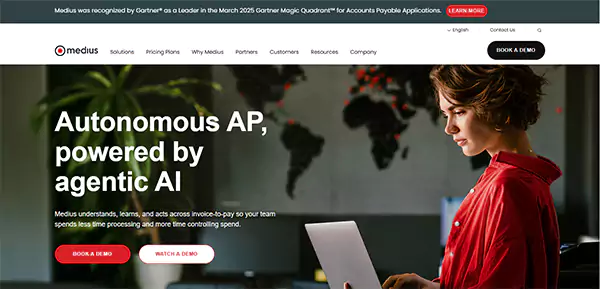
Medius is an AP automation software that integrates with major ERP
systems like Microsoft Dynamics and Oracle. It ensures real-time invoice processing and tracking that enables greater visibility into the cash flow and spending. Alongside, it centralizes the vendor data, streamlines payment terms and discounts, and develops a strong relationship with vendors.
Best For: Public Sector, Healthcare Industry, Construction Firms, Educational Institutions, Logistics, and Energy Sector.
Key Features:
- Flags the duplicate invoices to prevent false and duplicate payments.
- The supplier portal enables vendors to submit invoices, track the payment progress, and communicate directly with the AP team.
- Supports global relationships by handling payments in multiple currencies.
| Pros | Cons |
| Reduces manual errors and automates paper-free invoice processing. | Multi-currency and multi-language support is not well-established. |
| Supports mobile accessibility to manage reviews and approval anytime. | Slow performance with large data volume. |
| Tracks invoice action and ensures regulatory compliance. |
Pricing Details: Not disclosed publicly. Request a quote directly from the vendor.
6. Gatekeeper
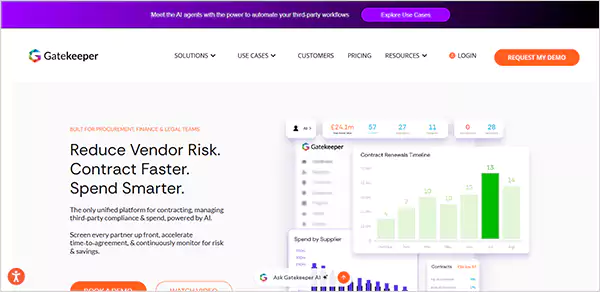
Gatekeeper is one of the leading vendor management platforms that unifies the vendors and contract details in one place. Trusted by over 300 reputed companies like Crocs, Ford, and more, Gatekeeper continuously monitors the third-party risks and keeps the non-compliant vendors out. The unique feature of this VMS is that it features real-time, data-driven scorecards that identify the top-performers and navigate the high-risk areas.
Best For: Finance, healthcare, and legal industries, and medium-to-large enterprises using 500+ contracts.
Key Features:
- 24/7 surveillance across the financial and regulatory standards of vendors.
- The spend module analyses third-party spending in one place and compares the forecast with the actual value.
- Features a separate vendor portal for registration, onboarding, management, and collaboration.
| Pros | Cons |
| Centralized contract repository and easy document retrieval. | Complex and slow set-up. |
| Data security and compliance with frameworks like ISO 27001 and ISO 9001. | It can be costly. |
| Simple search function, customizable, and allows easy editing. |
Pricing Details:
- Essential Plan: $1245 per month
- Pro Plan: $2995 per month
- Enterprise Plan: $5295 per month
7. Basware
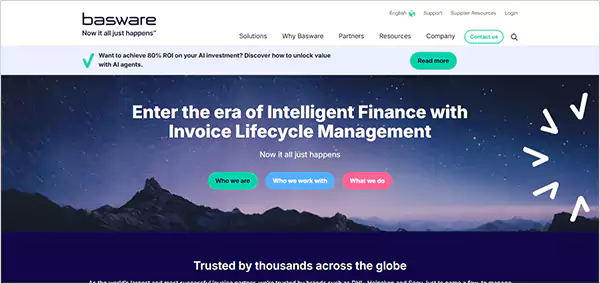
Basware is a global leader of AP automation and Invoice Lifecycle Management. It digitizes the entire purchasing lifecycle from order approval to purchase order creation. It facilitates the transaction process by enabling businesses to exchange electronic invoices with suppliers worldwide and ensures adherence to the tax compliance laws.
Key Features:
- Customizable KPI dashboards enable real-time insights into payment, procurement, and vendor performance.
- Streamlines the purchase, approval, and dispatch of the orders with speed and accuracy.
- Data-driven insights about the spending and cost-saving suggestions.
| Pros | Cons |
| Global network ensures supplier collaboration. | User-interface in unintuitive. |
| Predict the market trends and help in financial planning. | Mobile functionality is limited. |
| Automates the tax management. |
Pricing Details: Get in touch with the team to know the pricing.
8. Ivalua
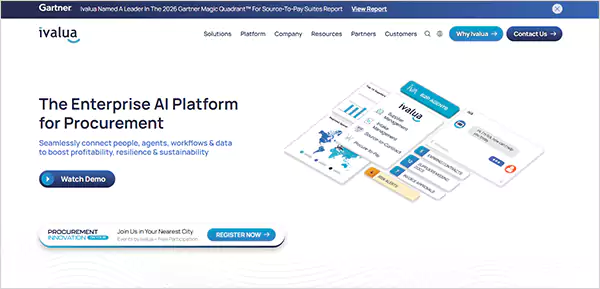
Founded in 2000, Ivalua is a leading vendor management platform that offers a unified platform for the source-to-pay suite and manages the entire purchasing lifecycle from sourcing to the final payment. It features performance tracking scorecards and allows visibility into the company-wide spending, tracks compliance, and prevents fraud.
Key Features:
- It uses AI to predict risks and offers real-time visibility into spending patterns and vendor performance.
- A dedicated vendor platform to collaborate with the purchasing organization and manage the data.
- Global multilingual support and real-time performance monitoring.
| Pros | Cons |
| A low-code approach enables easy customization. | The setup is complex. |
| Effective for complex supply chains. | Software bugs can disrupt the workflow. |
| The user interface is intuitive and easy to use. |
Pricing Details: Subscription-based pricing. Typically starts at $1,50,00 per year.
9. Beeline

Beeline is a cloud-based vendor management system that handles everything from sourcing to invoicing, and also includes statement-of-work (SOW) workstreams, non-employee tracking, and vendor oversight.
Trusted by best-known brands like Amazon, LinkedIn, Accenture, Airbus, and the rest, Beeline supports complex global programs and identifies operational risk with full transparency.
Best For: Staffing organizations, B2B SaaS firms, and big enterprises with a large vendor pool.
Key Features:
- Manages talent sourcing, shift scheduling, offboarding, and attendance management.
- Its human-led AI ensures speed and accuracy with compliance.
- Skill-based sourcing and multi-channel talent access.
| Pros | Cons |
| Strong risk identification and mitigation strategies. | Mobile optimization is limited. |
| The customer support team is helpful. | The system can lag during high traffic times. |
| UI is visually appealing and easy to navigate. |
Pricing Details: You can book a demo to get a tailored quote.
10. Procurify
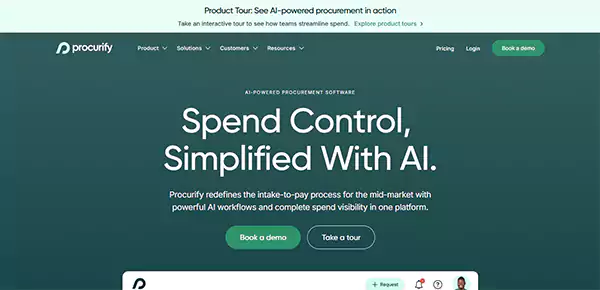
Procurify is an all-in-one platform for mid-market teams that automates the AP workflow. It centralizes expenses and spending control, all in one place. Procurify also features AI-powered receipt capture and spending cards that eliminate out-of-policy spends. It streamlines the intake-to-pay process, allowing users to create purchase requests, manage orders, and track budgets in real-time.
Key Features:
- Real-time spend visibility with budget tracking and planning.
- Easy integration with ERPs like NetSuite, QuickBooks, Microsoft Dynamics 365, and more.
- Allow users to manage purchase orders and approvals.
| Pros | Cons |
| Allows mobile app support. | Limited sourcing features |
| Strong budget control and tracking features. | It doesn’t work well for large enterprises. |
| Easy installation and use. |
Pricing Details: Procurify offers flexible pricing depending on the features and support needs.
8 Additional Vendor Management Software You Should Consider
Have a look at this comprehensive list of 8 additional vendor database software:
| Vendor Management Software | Pros | Cons |
| Proactis |
|
|
| Gatekeeper |
|
|
| Kissflow |
|
|
| Oracle Procurement Cloud |
|
|
| GEP Smart |
|
|
| Zycus |
|
|
| Precoro |
|
|
| Synertrade |
|
|
Benefits of Vendor Management Software
A robust vendor management tool offers significant benefits like data-driven insights, greater workforce visibility and spend control, and centralized information that enhances accessibility.
Here’s how strong vendor management system software adds value to the business:
- Workforce Visibility and Spend Control: By offering real-time insights into the vendor performance and greater visibility into the company-wide spending, VMS eliminates the unnecessary expenses and prevents fraud and duplicate payments. Allowing businesses to monitor the budget and compare the forecasted value with the actual value, it avoids overspending.
- Centralized Information: The vendor management platform consolidates all the data, such as contracts, compliance, and performance metrics, all in one place. It becomes a single source of truth that enables all employees to retrieve data and collaborate effectively.
- Data-Driven Insights: The predictive AI offers actionable insights into compliance risk, vendor performance, and market trends. It enables the businesses to take timely actions into the supplier issues before they hamper daily operations.
- Compliance Management: By ensuring that all the vendors meet contractual agreements, tax compliance, and GDPR, the vendor management system software mitigates the risk of financial penalties. It centralizes the storage of documents, contracts, and licenses with automated alerts for expiration.
- Enhanced Vendor Relationships: Managing multiple vendors at once can be complicated. Supplier management software enables businesses to source vendors through automated bidding, proposal verification, and performance tracking. It builds healthy relations and facilitates continuous improvement through performance scorecards and reviews.
Suggested Reading: Best Event Management Software in 2026 (Top 25 Compared)
Factors to Consider Before Selecting Vendor Management Software
While selecting a vendor management software, a business is required to analyse its needs and objectives, understand the functionality of the software, learn the integration system, and ensure that its selected VMS analyses vendor performance and identifies the risk.
Here are some factors that must be considered before selecting a vendor management system:
| Assess Business Needs and Objectives | Functionality |
| Assessing the businesses’ needs is the first step in selecting a vendor management platform. | An ideal vendor management software should have all the necessary features, such as vendor performance analysis, risk identification, and contract management. |
| If the business is complex and extensive, vendor management systems that align with the organization’s workflow will be essential. | It should be designed to enhance usability and functionality. Coupa and Ivalua offer intuitive UI. |
| Integration System | Vendor Performance and Risk Assessment |
| A vendor management system should integrate easily with the existing ERP system, like NetSuite or SAP. In the absence of an integrated system, the workflow becomes fragmented, leading to erroneous decision-making. | Select the vendor management platform that flags the high-risk areas and assesses vendor performance through KPI tools, their financial standards, compliance failures, and contract breaches. |
| Tipalti and Kissflow offer real-time integration with Microsoft Office, Google Workspace, Xero, and more. | Coupa and Gatekeeper are great VMS that regularly assess vendors’ performance and financial metrics. |
Conclusion
Procurement software is critical in medium to large-sized enterprises. They play a significant role in controlling the expenses, improving efficiency, and maintaining a fruitful relationship with vendors.
The best choice of a vendor database software depends entirely on the company’s needs and size, budget, complexity, and integration needs. So, before selecting a software, ensure that you evaluate its alignment with your needs and goals and that it delivers actual value to your organization.
Frequently Asked Questions (FAQs)
Q: What is supplier management software that works well for medium-large enterprises?
Q: Is supplier management software beneficial for small companies?
Ans: Yes, vendor management systems are beneficial for small companies as they streamline operations by automating the manual tasks and save costs and time in performing manual tasks.
Q: Can procurement software handle global operations?
Ans: Yes, vendor management platforms can handle global operations. Tipalti, Medius, Basware, and more are some of the vendor management systems that offer real-time visibility into the global operations.
Q: What is the best vendor management software for hybrid teams?
Ans: GEP Smart, Zycus, and Coupa are some of the best management software for hybrid teams. These are cloud-based tools that manage everything from vendor onboarding, workflows, and performance tracking.
Q: What are the factors I should consider before selecting a vendor management software?
Ans: It is essential to look for your business’s goals and objectives, functionality of VMS, its integration system, and whether the VMS you want to select analyzes the risk and vendor performance effectively.