Ans. Enterprise risk management software is a structured system to identify, assess, manage, monitor, mitigate, and report the risks that could affect a business’s objectives.
Top 12 Enterprise Risk Management Software to Mitigate Risks in 2026
POST BY
PUBLISHED
August 29, 2026
From Workiva, Optro, Riskonnect, and Diligent to MetricStream and LogicManager, enterprise risk management software is crucial in an ever-evolving business environment and market. Not only do these systems mitigate risk, but they also centralise it through real-time visibility via visual dashboards and compliance workflows to optimize management.
According to a report from Baker Tilly and the Internal Audit Foundation, the percentage of organisations with complete ERM processes increased from 9% in 2010 to 34% in 2023, nearly a fourfold increase. The global risk management market, on the other hand, is expected to grow more than triple, from $9 billion in 2025 to more than $32 billion in 2033.
Hence, with the growing risks, selecting the right software is crucial. Learn more about the following ERM systems that stand out for their features and usability.
Table of Contents:
What is Enterprise Risk Management? Why Is It Useful?
According to NIST’s Computer Security Resource Center, enterprise risk management is the “methods and processes used by an enterprise to manage risks to its mission” and to establish the trust necessary for the enterprise to support shared missions. It involves risk:
- Identification
- Assessment
- Mitigation
- Monitoring
- Reporting
In simple words, enterprise risk management software is a structured system to identify, assess, manage, monitor, mitigate, and report the risks that could affect a business’s objectives.
Hence, instead of handling risks across multiple departments and platforms, it provides a unified system for comprehensive insight into an organization’s risk exposure.
Top 5 Enterprise Risk Management Software For Robust Risk Management
LogicGate Risk Cloud, MetricStream, IBM OpenPages, SAP GRC, and Optro are the top picks for enterprise risk management software in 2026.
Here’s everything you need to know:
1. LogicGate Risk Cloud
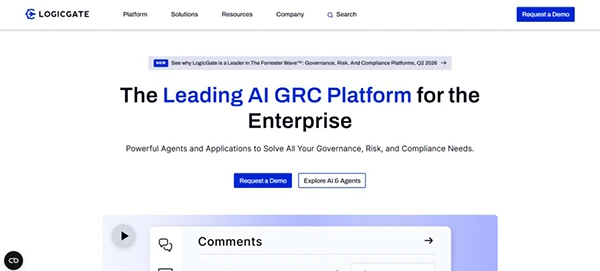
LogicGate Risk Cloud is one of the best no-code ERM systems and a strong choice for organisations that want to customize their workflow management without relying heavily on IT management.
Best suited for growing and mid-to-large enterprises, this ERM software offers everything from risk assessment to compliance and audit, cybersecurity risk management, automation, and risk quantification.
Key Features:
- Enterprise Risk Automation, Assessment, and Monitoring
- Quantify and Communicate Financial Risks
- Real-Time Value Tracking Dashboards
- Efficient AI Features
- Seamless Integration With Jira, Adobe Sign, Recruit, and 260+ tools.
| Pros | Cons |
| Easy configuration without coding. | Pricing is not publicly transparent. |
| Offers multiple risk domains in a single platform. | High setup time. |
| Features control across 25+ frameworks, and flexible dashboards that help identify trends and gaps easily. |
| Pricing Details | Request Custom Pricing |
2. MetricStream
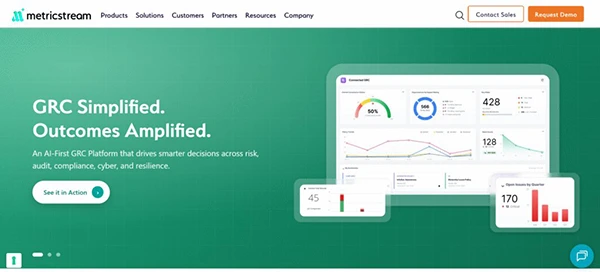
Recognised as a market leader by industry analysts, MetricStream is one of the best enterprise risk management tools, designed particularly for large companies managing risk across multiple business units and dealing with complex frameworks. Known for its cloud-based GRC systems, it is beneficial for organisations to bring risk management, compliance, and third-party risk and performance into one centralised system.
Key Features:
- Multi-framework compliance
- AI-driven risk quantification
- Offers role-based access
- Operational and strategic risk management
| Pros | Cons |
| Designed for complex working environments and offers robust customer support. | Implementation may require technical help. |
| Flexible interface, can be adjusted for different user roles. | Better suited for large organisations as the cost of ownership is high. |
| Allows multiple teams to manage risk data and generate insightful reports. |
| Pricing Details | Request Custom Pricing |
3. IBM OpenPages
Best suited for large and regulated business organisations, IBM OpenPages is an AI-powered GRC platform that helps manage enterprise-level risk with advanced analytics and AI capabilities. The best feature of this platform is that it brings operational, IT, and third-party risk to a unified platform, making it a strong choice for organisations with complex needs.
Key Features:
- Seamless integration with ERP systems, IT platforms, and data warehouses.
- Interactive dashboards and advanced analytics driven by IBM Cognos Analytics.
- AI-agent-based automation.
- Robust enterprise security capabilities.
| Pros | Cons |
| High user-friendliness, performance, and feasibility. | Not suitable for small and medium enterprises. |
| Offers executive dashboards for robust assessment and action. | Initial setup can be time-consuming and expensive. |
| Highly flexible and configurable. |
| Pricing Details | Book a live demo to get a custom quote |
4. SAP GRC
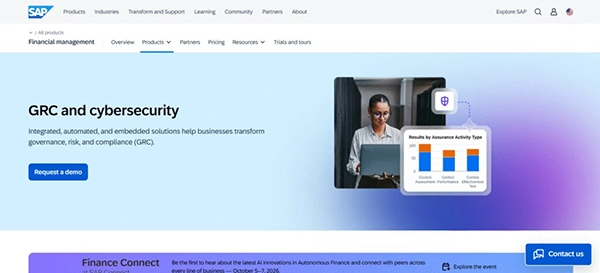
SAP GRC is one of the best options for large and SAP-centric organisations, which automates governance, monitors risks, and identifies cyber threats with real-time application-level monitoring. Its modular structure combines enterprise risk management, process controls, and audit compliance, and provides a centralised view of organisational risk.
Key Features:
- Robust fraud and anomaly detection
- Risk Analytics and Reporting
- Compliance Control
| Pros | Cons |
| Robust integration with broader SAP systems. | Its implementation may require specialised SAP or GRC expertise. |
| Modular structure allows organisations to choose capabilities based on their preferences. | The extensive functionality of SAP GRC makes it unsuitable for smaller organisations with limited needs. |
| Offers dashboard, reporting, KRIs, risk aggregation, and analysis. |
| Pricing Details | Book a Demo to Get a Custom Quote |
5. Optro
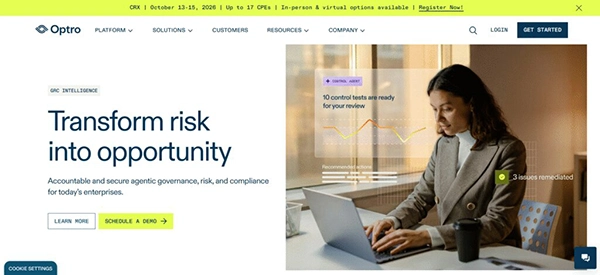
Best suited for mid-sized to large organisations, Optro is a smart ERM solution that centralises all the risks under one roof and builds resilient businesses by offering a clear view of the threat landscape. With notable features such as AI-driven insights, scenario modeling, risk appetite management, regulatory compliance, and customizable reporting, it supports more proactive and data-driven risk management.
Key Features:
- Internal audit management
- SOX compliance
- Key risk indicators and risk metrics
- Third-party, IT, and cyber risk management
- Customisable dashboards and reporting
| Pros | Cons |
| Intuitive and user-friendly interface, allowing easy navigation and status tracking. | Pricing is not publicly transparent. |
| Highly capable of managing organizations with complex requirements. | Steep learning curve and high implementation cost. |
| Robust and responsive customer support team. |
| Pricing Details | Requires a Custom Quote |
Extended List of 7 ERM Systems Worth Considering
Here’s an extended list of all the ERM tools best for your organisation in 2026:
| S No. | Enterprise Risk Management Software | Key Features | Pricing Details |
| 1. | Riskonnect |
| Schedule a demo for a custom quote |
| 2. | Workiva |
| Request a demo to get a custom quote |
| 3. | Resolver |
| Request Custom Pricing |
| 4. | Archer |
| Request a custom Quote |
| 5. | ServiceNow |
| Request a demo to get a custom quote |
| 6. | Fusion Risk Management |
| Request a demo to get a custom quote |
| 7. | LogicManager |
| Request a demo to get a custom quote |
Key Features to Look For In ERM Software
Risk identification, integration capabilities, third-party risk management, customisation, and advanced AI and analytics are the must-have key features in ERM software.
Here are the key features you must consider before finalising the software that meets your needs:
- Risk Identification, Assessment, and Monitoring: The right ERM tool is the one that not only identifies, assesses, and monitors risk, but also keeps the data in an auditable format. Qualitative and quantitative risk assessment capabilities help organisations prioritise tasks efficiently.
- Integration Capabilities: Select the platform that can connect with existing business systems, such as ERP, CRM, IT services, cybersecurity, and data analytics platforms. It prevents information silos and offers a comprehensive view of organisational risk.
- Third-Party Risk Management: If your organisation deals regularly with vendors, suppliers, or other external partners, consider selecting an ERM with third-party risk management capabilities. It should support vendor management and assessment, risk tracking, and incident management.
- AI and Advanced Analytics: Modern ERM platforms incorporate AI to identify patterns and risks, automate risk-related tasks, and support decision-making. However, it is important to evaluate how transparent, secure, and reliable these AI-driven insights are.
- Customisation and Scalability: An ERM system must be flexible enough to accommodate changing risk frameworks, business structure, and regulatory requirements. Customisable workflows enable easy adaptation as the organisation grows.
Also Read: Resource Management Software: 10 Best Tools Compared for 2026
The Bottom Line
To sum up, enterprise risk management software is crucial for any business in 2026. The availability of options is wide, from Workiva and MetricStream to LogicGate Risk Cloud, and more. Each ERM system has its own key features, pros, and cons, which must be considered before making a financial decision, while also considering your budget and needs.
Frequently Asked Questions (FAQs)
Q1. What is enterprise risk management software?
Q2. What are the top 5 risk management software options?
Ans. Workiva, Optro, Riskonnect, Diligent, MetricStream, and LogicManager are some of the best enterprise risk management tools, known for their robust ERM solutions, risk management, and in-depth governance and oversight.
Q3. What software is used for risk management?
Ans. ERM systems are crucial for any organisation to identify potential threats and stop them before financial and legal troubles occur. They continuously track risks and create strategies to mitigate them, while keeping the teams on track.
Q4. Why is risk management software important for any organisation?
Ans. ERM systems are crucial for any organisation to identify potential threats and stop them before financial and legal troubles occur. They continuously track risks and create strategies to mitigate them, while keeping the teams on track.