Ans: Compared to CMMS, EAM (Enterprise Asset Management) is broader and covers various aspects of an organization, like long-term asset planning, maintenance, and financial planning.
What is Maintenance Management Software? 5 Best Tried and Tested
POST BY
PUBLISHED
June 11, 2026
As the name suggests, maintenance management software manages and keeps track of daily activities, planning, organizing, and notifying maintenance automatically.
It reduces the dependency on human intervention and facilitates streamlined supervision, leading to utilization in various fields to improve productivity in key protocol areas.
This article is going to shed light on the terminology of maintenance software in different fields, its importance, and what are some of the best software out there.
Table of Content:
What is Maintenance Management Software?
Maintenance software is also known as a management system that equips an organization with a centralized tracking system.
The system automates all the maintenance processes, reducing the load of paperwork. Integration of such systems is viable for heavy asset-owned industries like manufacturing, healthcare, fleet, hospitality, and utilities.
Its main goal is to eliminate delay and give equipment technicians agile access to repair equipment. And that’s just the tip of the iceberg; the integration of maintenance software brings a lot of swiftness and a systematic approach that we will discuss below.
Significance of Maintenance Management Software
By replacing manual inspection with systematic digital workflow tracking, the data flows in a synchronized manner. Having an automated system reduces monetary and productivity loss for industries with heavy assets that face downtime due to heavy loads.
So, is it like having one of those most leveraged best asset management software? No, but in some aspects they overlap each other.
Industries equipped with a smart management system often notice:
- Reduced downtime cost and simplification of inventory management. Having a well-managed inventory of parts and timely check of equipment reduces repair time, loss of opportunity, and compliance fines.
- The proactive approach to maintaining the machinery lengthens its lifespan and provides peak performance.
- Having such a smart and reliable system allows management and technicians to make data-driven decisions that are more accurate compared to assumptions and manual intervention.
- Instead of getting tangled with paperwork and logs, maintenance software provides systematic reports with a time stamp for asset safety and adherence.
- The execution of tasks and necessary diagnosis becomes quicker and allows you to plan ahead with systematic records.
The impact of CMMS (Computerized Maintenance Management System) entirely depends on how and what kind of architecture is implemented.
Types of Management Tracking Software
Understanding various types of maintenance systems allows enterprises to embed the one that truly aligns with the structure and mobility needs.Thus, you must know all about its kinds.
So, here are the common types of management software architecture are:
1. CMMS (Computerized Maintenance Management System)
CMMS and maintenance management systems are synonymous with each other. Both terms are used interchangeably that overlook the management of inventory, assets, condition, and work orders.
2. Enterprise Asset Management
Enterprise Asset Management is a complete asset management system that comes with additional lifecycle management from acquisition. It also facilitates deep financial planning, human resource scheduling, and long-term capital planning.
It’s best suited for:
- Heavy capital investment industries like oil, electricity, etc.
- Where cross-functionality is required.
- Large-scale enterprises
3. Enterprise Resources Planning
An all-in-one system that oversees supply chain, finance, core business processes, and HR management. It binds the ecosystem of businesses that facilitates proper management of internal functionality.
This kind of architecture is best suited for:
- Heavy supply chain organizations
- Finance-driven asset management
- Centralized corporate structure
4. Asset Performance Management
Asset performance management software leverages AI to make data-driven decisions and predict how exactly an asset will bring efficiency and for how long it will keep optimizing the operations. The analytics and real-time monitoring are the key features that make it the best fit for a highly critical asset.
It can be implemented in:
- Organizations where predictive stats are required
- Power, oil refineries, chemical processing, and automated manufacturing
- Modern plants that are equipped with sensors, IoT, monitors, and so on
5. Fleet Maintenance Software
As the fleet industry continues to grow, the requirement for robust and specialized maintenance management software becomes necessary. It allows industries to efficiently manage the route, keeping the operations at a minimal cost.
Such a system is curated for:
- Logistics and delivery
- Sales fleet
- Public transit and municipality
Top 5 Best Maintenance Management Software
MaintainX, Coast, and Fiix are some of the leading software in the market that might be the best fit.
1. MaintainX
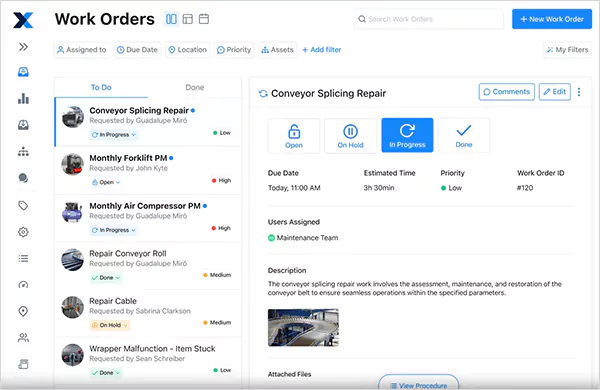
MaintainX is renowned for providing a navigable structure that is user-friendly in nature and a perfect fit, especially for those who are not tech geeks. The layout is similar to a messaging application, which is just excellent for a fast-paced environment.
| Pros | Cons |
| High adoption rate | Deep analysis is missing |
| Chat-like interface with space to collaborate and communicate | Unable to fetch advanced predictive maintenance |
| Easier to set up | |
| Removes intricate challenges during training |
2. Limble CMMS
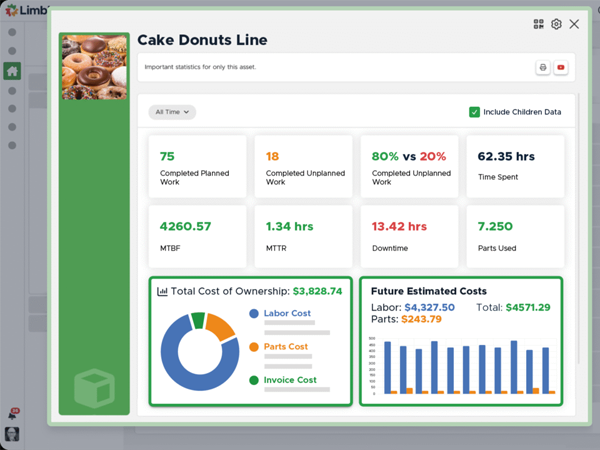
Limble is the true example of what a precision and user-friendly system looks like. Automated QR system simplifies asset lookup and executes a preventive maintenance schedule without needing additional software.
| Pros | Cons |
| Highly personalized system | A wide range of customization can lead to confusion |
| Streamlines scanning codes and managing inventory effortlessly | The application can lag at times |
| Strong automation, as it triggers whenever the equipment goes below the required quantity |
3. Coast
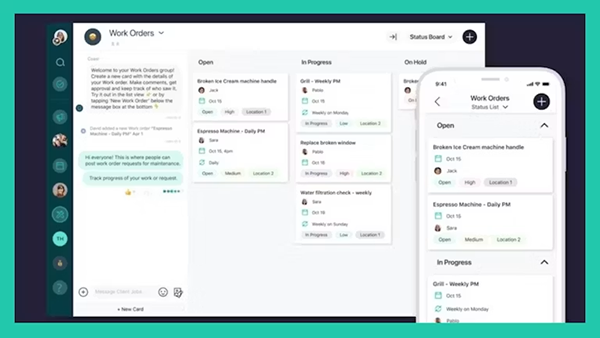
Coast supports structure maintenance and documentation to simplify technicians’ needs and connects all the resources, like reporting, messaging, and scheduling, just under one dashboard. Furthermore, it facilitates easy creation and assignment of tasks, which facilitates labor and cost tracking.
| Pros | Cons |
| Mobile-friendly design | Advanced analytics is limited to high-end pricing models |
| Easily connects with the team and lets you share information | |
| Highly customizable | |
| Strong preventive maintenance |
4. Fiix
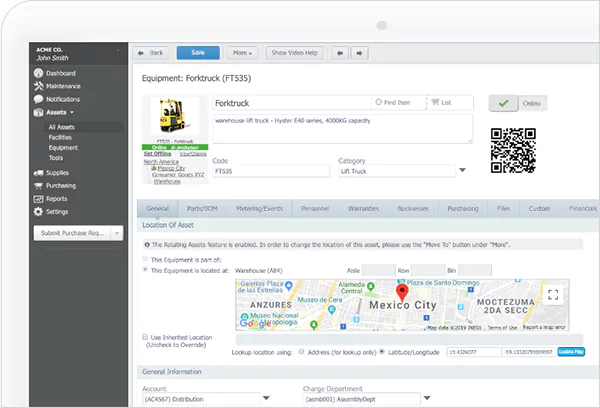
The most highlighted feature of Fiix is its seamless IoT and ERP integration along with other business systems. Another major feature is its Foresight feature that uses AI to analyze historical data and patterns to provide proper follow-up strategies.
| Pros | Cons |
| Compatible with the current system | Not fully autonomous |
| AI-driven insights | Requires IT expertise |
| IoT integration | Advanced features are limited to higher pricing tiers |
| Include ERP and financial system |
5. Fracttal one
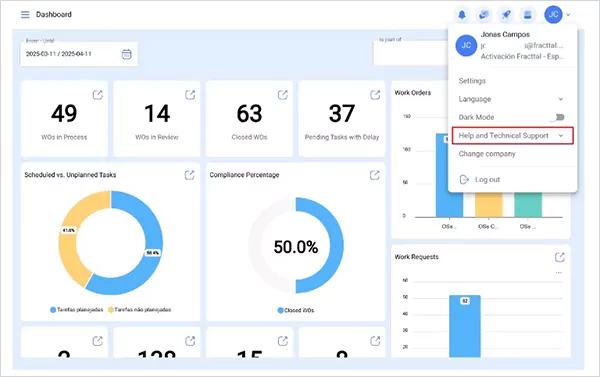
One of the most flexible structures on the list is Fracttal One. Its mobile-friendly layout makes it a standout.
A recommended system for fleet managers and transportation, as it allows administrators to keep track of assets remotely and log actions in one go. Making it easier to manage inventory and assess advanced insights.
| Pros | Cons |
| Provides a native IoT ecosystem | Heavy setup cost |
| Predictive diagnostic | Limited legacy integration |
| Sleek, navigable UI |
Benefits and Drawbacks of Software for Maintenance Management
Compared to traditional methods, maintenance management software truly understands the crucial need for budgeting, forecasting, and reducing management costs.
But integrating your operations with CMMS isn’t just greenery all along; there are certain challenges and downsides that need to be addressed as well.
| Benefits | Drawbacks |
| Key metrics and KPI indicators are easily met. | Incorrect data entry can reduce system accuracy and reliability. |
| Eliminates repetitive tasks and unplanned downtime. | Employees may resist adapting to automated processes. |
| Aids organizations in establishing SOPs and keeping an accurate record of compliance. | Integrating CMMS with existing ERP software programs can be costly and time-consuming. |
| Tracking of employee training and overall working hours can be easily done. | Continuous training is required to keep up with software updates. |
| Facilitates the implementation of a predictive maintenance approach, making overall preventive maintenance strategies more effective. |
Final Words
To make a shift to an autonomous management system that truly makes the most out of operations, CMMS plays a pivotal role. Maintenance management software holds the ability to scale your future growth and standardize work order procedures.
Having a system that makes the strategic implementation and supervision KPI is a boon that ensures long-term success.
Read Next: ERP vs CRM: Understand the Key Differences, Functions, Benefits, and More
FAQs
Q1. What is the difference between CMMS and EAM?
Q2. Does the organization need hands-on training after integrating maintenance management software?
Ans: Yes, basic training is required to effectively operate the system and implement services. The hands-on training is not rocket science and can be easily adapted to the current working system.
Q3. Does CMMS work when the internet is not working?
Ans: The majority of functionality remains operational when the internet is offline. CMMS does have an offline mode where technicians can update tasks and scan assets that automatically sync the changes when the system is back online.
Q4. Can maintenance software aid in reducing energy consumption?
Ans: Technically yes! Maintenance software ensures that high-energy consumption machinery goes through the necessary service and calibration to prevent energy spikes due to clogged components.
Q5. Is CMMS scalable?
Ans: Yes, if you outgrow your current system, a cloud-based management system is equipped to upgrade its functionality by preserving the previous data and seamlessly catering to the current needs of the industry.
Sources: