The rapid use of PMS has evolved the medical and healthcare space, transforming it towards technology by reducing manual work and repetitive admin work and automating routine operations to give a better experience to patients and staff members in less time.
What is Practice Management Software? Features, Benefits, and Tools
POST BY
PUBLISHED
September 22, 2026
In recent years, major technological advancements have happened in the healthcare industry. Including major changes in managing the administrative workflow, which have become possible due to practice management using various developed software. Practice Management Software is the technology used to automate, streamline, and transform various administrative and operational tasks in healthcare organizations. It involves easier patient communication, scheduling of appointments, and workflow management.
In this detailed article, I will tell you what practice management software is, what its benefits are, and how it has reshaped the administrative workflow of healthcare in a modified way.
Table of Contents:
What is Practice Management Software?

Practice management software is a digital platform/system that helps to organize, automate, and structure administrative and operational tasks by managing patient information, appointments, reports, billing, payments, and insurance claims in real time to increase workflow efficiency and smoothness by reducing manual work.
The most important task of medical practitioners is to help patients, but managing the whole operational work takes up their time. This software helps them to plan their day, manage patient accounts, organize clinical staff, and enhance patient satisfaction.
According to the National Library of Medicine, administrative expenses account for nearly 25% of health care spending, far more than in other countries. Each layer of paperwork, claims processing, and billing adds to the overall cost.
Key Features of Practice Management Software

Modern PMS provides healthcare practitioners with various additional benefits. But almost all software work same characteristics that are basic and contribute to the overall smooth functioning of medical organizations. Some of the key features of practice management systems are:
1. Scheduling of Appointments and Patient Management
Software manages appointments and patient flow by ensuring patient convenience.
- Book appointments, give checkup reminders (by phone, text messages)
- Connect the patient to the right specialist
- Give patients flexible care delivery options
- Manage cancellations by rescheduling the empty spot/time
Managing Payments and the Revenue Cycle
Revenue cycle management is the process in medical practices to manage and automate the financial aspects of patient billing, claims, insurances. Software helps in:
- Patient registration when a new patient visits
- Checking for the patient’s active insurance policies
- Submission of medical claims to the insurance provider
- Receiving payment after the claim approvals
- Payment tracking and customizing bills according to the patient’s needs
Access to Patient Health Records Electronically
Doctors/specialists can have the patient’s full information, as this software can link to the Electronic Health Systems (digital platform or tool that keeps the patient’s medical information in a digital format) to track the patient’s medical history. The integration of PMS to EHR systems helps to:
- Provide patient allergies and medications, past surgeries, etc.
- Mobile access to see the records at any time
- Keep a check on patient engagement and suggest needful changes that are required to be done on time
Smooth Integration Between Multiple Platforms
Medical care isn’t limited to one workplace. From hospitals to labs and from clinics to nursing homes, each place requires good coordination with all others. Modern software provides smooth integration between multiple platforms and workplaces by:
- Efficient use of API (Application Programming Interfaces) to ensure seamless data exchange between platforms using protocols.
- Data security during transmission of information
- Network stability between the systems
Work-Friendly Interfaces
Successful software enables users to have a smooth experience without making errors or experiencing network glitches. Modern-day software
- Easy to use
- Has customized dashboards
- Staff need no specific training to use the software
- Good mobile responsiveness
Some Popular Practice Management Software
There are many medical practice management systems/software available in the market that are widely popular for providing the best solutions; choosing one of them depends on your business and medical needs. Here are some of the best-known software solutions that can take on the responsibility of automating your daily work.
1. TherapyNotes
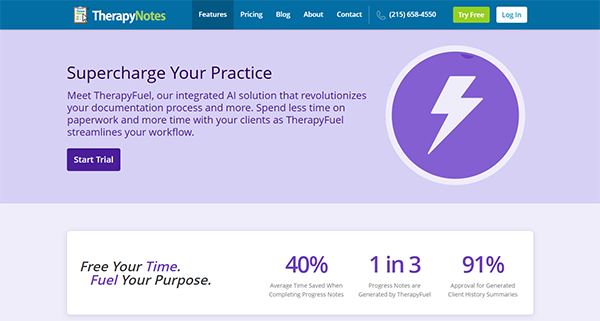
TherapyNotes is an AI-integrated platform used in medical healthcare organizations that helps with the documentation process by reducing the paperwork. It’s TherapyFuel that generates drafts, objectives, and treatment planning for each treatment in proper notes. This software also summarizes client history and eases the insurance documentation verification process.
2. Tebra

Tebra is an EHR-integrated, cloud-based platform that supports clinical workflows through automatic appointment scheduling and AI-assisted note generation, provides electronic prescriptions, and saves time.
3. Medesk
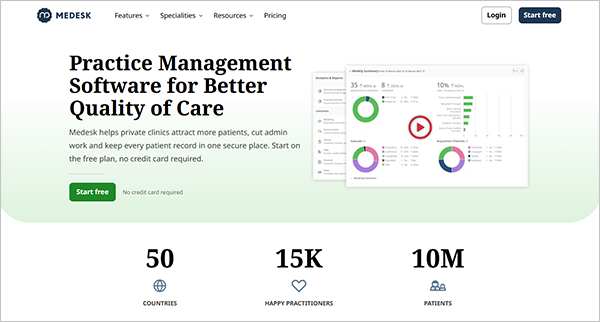
Medesk is a clinic-from-anywhere platform where you can customize your reports for scheduling appointments and checking staff performance. It can sync with Google Calendar to track doctors’ schedules and provides EHR functionality, automates reminders, and emails confirmations; it also allows patients to manage their appointments themselves.
4. EpicSystems
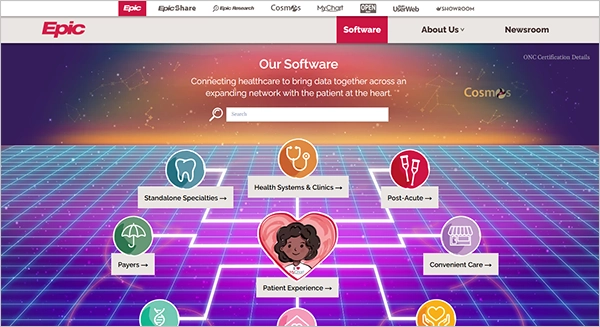
EpicSystems is a large-scale PMS that provides clinical services from scheduling to billing everything with an integrated EHR system. It works on three AI agents:
- Art: AI-based patient-clinician conversational chat that provides clinical suggestions and answers their queries
- Penny: It manages the revenue cycle of patients’ medical insurance
- Emmie: A chatbot to answer patient questions on billing, appointments, etc.
5. DrChrono
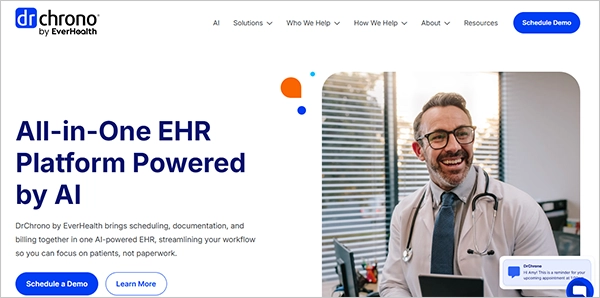
DrChrono has mobile-friendly software that provides all services of EHR, billing, appointments, and telehealth in a single system. It is suitable for those who want to access their information, reports, and appointments anytime and anywhere.
Some other popular practice management software that are widely used by medical practitioners are given below.
| Software Solution | Best for |
| CareCloud | Manages patient interaction; provides front desk solutions with AI-powered tools |
| athenahealth | RCM work: manages financial workflows, simplifies medical billing/claim process |
| SimplePractice | Specially designed for behavioral health practitioners (therapists, counselors, etc.) to manage their practice and workflow |
| CureMD | For heavy inventory management (stock, medications, equipment), KPIs, dashboards, patient portals |
| Oracle | Insights and data analytics to assist the practitioner in providing data-driven care |
Also check: 10 Best Onboarding Software to Simplify New Hire Management
What is Cloud-Based Practice Management Software?
Cloud-based practice management software is digital software that uses the internet by hosting on remote servers instead of hosting on in-house servers to streamline the administrative and financial workflows of healthcare organizations.
It is significantly better than traditional software, as cloud-based software cuts the extra cost of heavy IT infrastructure, and support improves remote data accessibility and provides an extra layer of data security with minimal or no disruptions at work.
How to Select the Best Practice Management Software for Your Business?
Opting for the specific software varies with the organization and its needs. But there are various options available in the market to explore. Here are some of the points that you must consider while choosing the best software for your business:
- Analyze your needs first: Any business, whether a small clinic or a big hospital, always treats its patients as the first priority. Opting for software that doesn’t align with your needs and goals may hamper your workflow as well as patient satisfaction.
Before jumping into the solution,
- Analyze where your medical organization is lagging in workflow.
- Do you need assistance in managing the inventory or bills?
- Are your patients not satisfied with your services being delayed?
- Where are unnecessary cost cuts happening?
- What is your budget for buying new software?
- Ensure Integration and Flexibility: For any organization to run smoothly, it should have quicker access to patient information, which can only be possible if the information is transferred between systems and software more quickly. Ensure the smooth integration of the EHR system with your software to reduce repeated tasks and improve how easily information is shared between different departments of the organisation.
- Cost-effectiveness: According to your organization’s size and staff strength, you should select the software that is good value for money. If it is not providing various features like automated communication and easy access to the patient portal, then you can integrate these services by paying extra money, or you can opt for another software. Make sure the software providers do not demand additional charges from time to time for its maintenance in the name of extra benefits.
- Comply well with data security and privacy: Software keeps confidential client, company, and patient information. You need to check whether the software is ISO certified and meets strict security guidelines.
- Customer satisfaction: The most valuable point to know if the software you want to adopt will really work for you or not. Check for customer reviews and discussions in various community forums and discussions (if available for that software), and check the reviews of the software on the software’s site.
Conclusion
Practice Management Software is basically a technology/digital platform that eases the clinical workflow by streamlining the administrative and operational workflow of healthcare organizations. From appointments to billing, integrating EHR, and managing the patient revenue cycle are some of the features that various PMS provide.
But the role of a suitable PMS doesn’t end with providing numerous features. It should align well with the clinicians’ and the patients/customers’ requirements as well.
FAQs
How does the use of practice management software reshape medical and healthcare organizations?
Are PMS mainly for the healthcare industry?
Yes, PMS are basically designed for medical and healthcare organizations, as it is a critical industry and involves a lot of fieldwork and management. Any mistake, either in documentation, patient medical history, prescriptions, or insurance claims, can affect patient health and can cause a major setback to clinicians and organizations. To streamline the work, this software is specially designed with care to ease the workload and pressure in this industry.
Which is the best PMS for my small clinic?
Choosing the best one is not possible, as numerous software solutions provide excellent services to their patients. But the best one can depend on your needs, budget, and time. Before finding the solutions, always check your preferred choices and requirements, then go for the service or software that meets almost all your requirements. If you are handling a small clinic, then you won’t have the need for heavy software; just go for the one that can provide minimal services at a decent price range.
Sources
National Library of Medicine: According to the National Library of Medicine, administrative expenses account for nearly 25% of health care spending
Zandahealth: What is Practice Management Software
Athenahealth: What is Practice Management Software?