An embodied AI is a branch of artificial intelligence in which an AI system is housed within a physical body that can perceive, move, and manipulate its environment rather than existing as software or on screen.
How Embodied AI Robots Can Transform Research
POST BY
PUBLISHED
November 9, 2026
Embodied AI robots, also known as physical intelligence, can reshape research by moving virtual intelligence out of software-based environments into the physical world. Instead of confining experiments to simulations, researchers and analysts can study how AI systems perceive, move, manipulate objects, and respond to constantly changing conditions in real time. That transfer matters across robotics, human-machine interaction, applied AI, and laboratory automation. Embodied/autonomous systems can collect physical data, repeat tasks consistently, and test models under realistic constraints such as balance, sensing noise, and environmental changes. They also help research teams to explore questions that require action, not just prediction. As labs look for faster replication and stronger links between theory and deployment, embodied AI robots offer practical ways to streamline workflows, expand experimentation, and open new scientific directions.
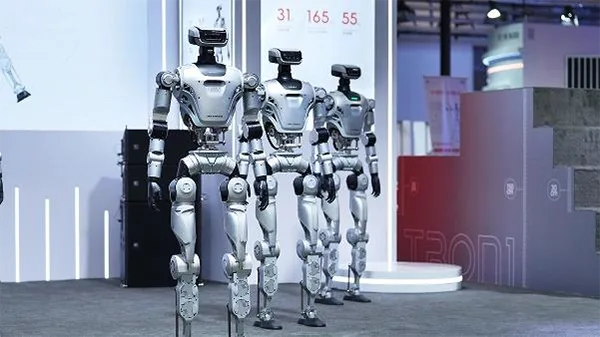
Table of Contents:
1. Automating Experiments and Physical Data Collection
Reducing Manual Work in Repetitive Tedious Tasks
Embodied AI robots/cyber-physical systems can take over recurring physical tasks that often slow down the work speed of research teams. In various projects, researchers still spend several hours moving equipment, repeating motion sequences, recording observations, or gathering samples under monitored conditions. A robot can align perfectly to these routines with consistent timing and replicability, reducing human error and making datasets easier to compare across trials. It matters in robotics, biomechanics, human-robot interaction, and applied AI-led testing, where even small variations in execution can affect favorable outcomes. By automating physical data collection, researchers can run more experiments in less time so that they can focus more on analysis, model development, and study design. The outcome is a more efficient workflow with improved experimental consistency and better use of skilled human labor.
Improving Research Efficiency With Intelligent Robot Platforms
Intelligent robot platforms improve research efficiency as they combine sensing, motion, and onboard computing in a standalone system. LimX Oli, a full-size humanoid robot, stands 165 cm tall and offers up to 31 DoF (Degrees of Freedom), which enables humanoid postures and a wide range of motion for embodied AI studies. Its independent calculation for motion control and perception supports advanced algorithm research without overloading a single processing pathway. For data-intensive experiments, Oli includes a self-developed 6-axis IMU (Inertial Measurement Unit), head- and chest-mounted Intel® RealSense™ D435i depth cameras, and USB 3.0 and 3.2 interfaces for external sensors such as LiDAR (Light Detection and Ranging, which helps to make 3D models of physical environments) and added cameras. Its foldable seated storage design also simplifies transport and single-handed operation, helping labs deploy experiments faster across various settings.
2. Advancing Real-World Robotics and AI Experiments
Testing AI Models in Dynamic Research Environments
An embodied AI robot helps researchers to test models in versatile environments where conditions change every single moment. It provides a feasible way to evaluate how intelligent systems interact with the physical world, which is critical because many AI systems execute well in controlled digital settings but struggle to face uneven surfaces, moving people, sensor interference, or unexpected hindrances. Physical testing reveals how models handle uncertainty, delayed feedback, and real-world perception limits. It also helps researchers evaluate desirability, safety, and adaptation, not just benchmark accuracy. In studies of navigation, manipulation, and interactive behavior, an embodied AI robot provides a direct way to observe how AI decisions convert into action. This creates hard evidence for whether a model is truly ready for deployment and gives teams clearer insight into failure modes that simulation alone may not expose.
Connecting Simulation With Physical Robot Deployment
Simulation remains valuable for rapid sampling, but research advances faster when teams can connect simulated results to physical deployment. Embodied AI robots make this transition possible by displaying where does a policy trained in software succeeds, breaks, or needs refinement in the real world. Researchers can compare expected behavior with actual sensor input, actuator response, and environmental friction, then adjust models based on data-backed evidence. This closes an important gap between algorithm development and system validation. It also supports more realistic revision cycles, where simulation informs deployment, which in turn improves simulation assumptions. For robotics and AI research, that feedback loop consequently gives stronger models, more reliable motion planning, and useful benchmarks, as experiments reflect physical constraints rather than idealized virtual conditions alone.
3. Accelerating Collaboration and New Research Possibilities
Making Robotics Research More Flexible and Accessible
Physical AI can make robotics research more flexible and accessible by reducing practical barriers. When a platform is easier to operate, transport, and reconfigure, more teams can include physical experimentation in their work instead of relying only on software models. That benefits interdisciplinary projects involving AI, cognitive science, rehabilitation, education, and human-machine interaction. Features such as easy setup, external sensor support, and intuitive control tools help researchers focus on experiments rather than platform maintenance. Voice interaction can also support faster testing of human-centered interfaces and communication studies. By reducing executional roadblocks, embodied systems allow smaller teams, shared labs, and cross-functional researchers to run meaningful trials, prototype ideas quickly, and participate in robotics research with fewer technocrats.
Expanding Research Into New Scientific Applications
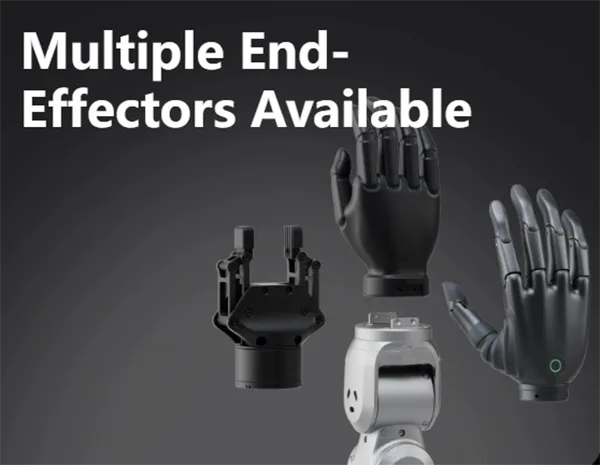
Embodied AI robots expand research into scientific applications that require movement, interpretation, and interaction in the physical world. They can support studies in supportive technology, social robotics, autonomous inspection, embodied cognition, and task learning through demonstration. A humanoid platform is especially useful when researchers want to evaluate tools, spaces, or operations designed around human form and motion. Capabilities such as bilingual voice interaction, custom knowledge base uploads, and no-code automation platforms can also support experiments in communication, education, public engagement, and interactive performance. These robots combine sensing, decision-making, and action, which helps researchers explore questions that span multiple disciplines at once. This range creates new opportunities for applied science, real-world validation, and novel experimental design beyond traditional laboratory boundaries.
Conclusion
Embodied AI robots can transform research in three distinct ways: by automating recurring experiments, improving real-world testing of AI and robotics systems, and expanding collaboration across new applications. Researchers can collect data in a more consistent manner, evaluate models under realistic conditions, and better transition from simulation to deployment with stronger evidence. They also make it easier for interdisciplinary teams to test ideas that depend on movement, perception, and human-centered interaction. As research priorities shift toward practical validation and faster replication, embodied systems will become more important in both academic and applied settings. Labs that adopt these platforms can improve workflow efficiency while exploring questions that software alone cannot answer, making embodied AI a meaningful tool for the next stage of research development.
FAQs
What does embodied AI mean?
How do embodied AI systems solve real-world problems?
Embodied AI systems solve real-world problems by physically interacting with real-world objects or performing tasks that are difficult, dangerous, or time-consuming for humans to do, such as precision surgeries, targeted farming, warehouse automation, search and rescue operations, etc.
What are some of the common types of embodied AI?
Some common types of embodied AI are humanoid robots and industrial and robotic armsdrones and , robot dogs, automated vehicles, commercial robots, etc.
Are physical AI systems dangerous for humans?
Yes, physical AI systems can be dangerous for humans as they interact with physical environments, so faulty sensors, physical damage in the systems, and sudden or unplanned automatic changes affect the simulations, which in turn can abruptly change the possible outcomes.
What common types of challenges are faced by embodied AI robots/systems?
Common challenges faced by embodied AI systems are difficulty in understanding the real-world environment, handling objects, and making quick decisions, and the simulation-to-reality gap due to physical friction and dynamics or hardware instabilities.