The following are the common mistakes that halt growth:
- Focusing only on the general text
- Inconsistency in different sections
- Ensuring speed over accuracy

A product can be technically perfect in its home market but still struggle when entering a new region. This is more common than most teams admit. One of the obvious reasons is how communication breaks down once the product crosses borders.
Even with strong fundamentals, organizations often underestimate how much clarity perfect regional language and context bring, and this is where software language translation services become an important factor between growth and silent failure.
This article outlines the importance of such services and why they are essential in bringing strong results for companies that look to adapt to new market situations across borders.
Key Takeaways
- Translation of text isn’t enough to optimize a product for a new region, and its market
- Proper context is important, as some phrases may appear too direct or overly formal depending on the regions
- Small misunderstandings accumulate quickly and lead to a gradual drop in the trust of the user base in the product
- It is important to deeply study a market, its preferences, and behavior before launching a product directly
When software enters a new market, teams usually assume that translating text is enough. Buttons are translated, menus are adapted, and onboarding screens are localized. On the surface, everything appears ready.
But users don’t experience software in isolated strings of text. They experience flow, timing, tone, and emotional confidence. If a phrase feels slightly off, or instructions don’t match how people in that region usually think about a task, hesitation begins to build.
This hesitation cannot be noticeable unless it’s too late. It doesn’t show up as complaints in analytics; instead, it appears as small shifts, such as slower onboarding, repeated screen visits, and abandoned sign-ups.
The product still functions as intended, but trust starts dropping in ways that are tough to face. This gap is rarely technical but contextual.
Most failures in new markets don’t come from poor functionality. They come from misalignment between how a product communicates and how users interpret that communication in their own environment. Language is only one layer, and cultural logic is another.
For example, a confirmation message that looks neutral in one region might end up sounding overly direct or even alarming in another.
A financial term that is understood in one market might feel too vague or overly formal elsewhere. These tiny differences in tone can change whether a user feels safe continuing or decides to quit. This is where companies get to know that translation is not the final step. It is part of product design itself.
When this is ignored, even strong products behave like they are “half understood” in new markets. And users rarely make the effort to decode software; they simply move on.

The impact of these small misunderstandings compounds quickly. User acquisition costs rise because conversions drop. Support requests increase because users are confused by basic flows.
Product teams misinterpret analytics and assume feature problems exist when the real issue lies in comprehension.
In some situations, markets that looked promising on paper never reach their expected potential simply because users never fully trust the experience enough to stay.
This is mistaken for product-market fit failure. In reality, it is communication friction. Even big companies working with a software localization company at a basic level miss the deeper layer. Localization is not just about simply translating text but about reshaping the entire experience and how the meaning of everything is delivered.
Many teams repeat similar mistakes when entering new regions: they rely too heavily on literal translation without testing how phrases feel in real use. They assume that English UI structure will naturally work everywhere.
They also localize only visible text, while ignoring error messages, system prompts, or edge-case screens that actually carry the most emotional weight during user frustration.
Another common issue is inconsistency. One part of the product feels localized properly, while another section still carries foreign phrasing or awkward structure. Users notice this inconsistency more than teams expect, even if they cannot articulate it clearly.
And perhaps the most overlooked mistake is speed over accuracy. Companies rush to launch multiple markets at once, assuming iteration will fix early confusion. But first impressions in software are difficult to repair once trust is damaged.
Fun Fact
Successful international launches require adapting the marketing approach, looking to hire local talent, and setting up operational frameworks that closely align with local customs.
Better outcomes usually come from treating localization as an ongoing product function rather than a one-time task.
Teams that succeed in new markets tend to spend more time observing real user behavior after launch. They don’t just translate content—they adjust flows based on where users hesitate or drop off. They refine tone based on support feedback. They treat language as part of UX testing rather than a separate department responsibility.
In practice, this means working closely with teams that understand both language and product behavior, not just vocabulary. A reliable translation service provider often plays a significant role in this process by not just converting text but helping shape and clarify across the full user journey.
The strongest results come when localization is tested in real environments, not assumed from static content reviews.
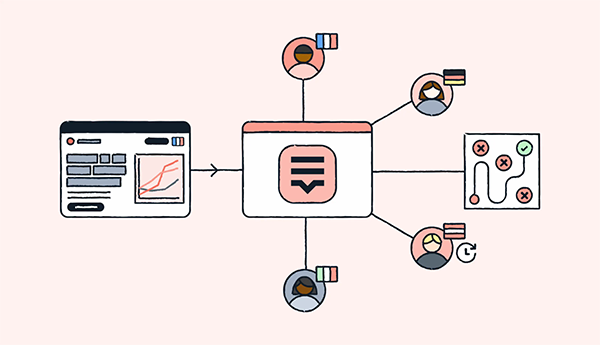
A sentence can be perfectly translated and still fail to be understood by the user. That’s because accuracy alone doesn’t guarantee clarity.
In software, clarity depends on expectation. Users bring mental models decided by their language, habits, and past digital experiences. If the software doesn’t align with such expectations, problems begin, even if everything is technically correct.
This is why some products succeed in one region and end up underperforming in another without any noticeable differences in the product. The difference is not the code. It is how meaning is carried through the interface.
The companies that recognize this early tend to scale faster because they start treating it as part of product architecture.
The real evolution in global software expansion is not about translating more content. It is about reducing uncertainty for users who are using a product for the first time in their own language and cultural context.
That requires more than linguistic accuracy. It requires awareness of how people interpret actions, warnings, choices, and outcomes in everyday digital interactions.
When software communicates naturally in a user’s environment, adoption feels effortless. When it doesn’t, even the best-designed products feel unfamiliar.
Most software doesn’t fail in new markets because it lacks quality. It fails because it assumes understanding instead of earning it. Global growth is less about building new features and more about reducing the distance between intention and interpretation.
Once that gap closes, users don’t just try the product; they stay with it. And in the long run, that is what actually defines whether a great product becomes a global one.
The following are the common mistakes that halt growth:
The real impact is subtle, with a declining user base of the product, which is not even noticeable on paper until it’s too late and recovery becomes impossible.
The proper context of the translated text ensures that the message is understood in the same sense as what the developer expected it to be, which requires a comprehensive study of mental models of regions and usual behavior.
A good adaptation focuses on all aspects that require deeper introspection of the market and its regions, enabling proper growth of the product in every market.
Engage with us through our business channels and witness your success


Zingmatrix 2026. All Rights Reserved.