Depends on your needs. QuickBooks Online/Xero for everyday bookkeeping, NetSuite/Sage Intacct for large firms, FinQuery for complex systems.
Best Accounting Tools for Growing Companies
POST BY
PUBLISHED
July 23, 2026

“What gets measured gets managed.” — Peter Drucker (Management Exper)
Business growth looks exciting, but it also puts pressure on your employees. More customers, vendors, entities, contracts, and transactions mean more moving parts to track for the finance team. What once worked in spreadsheets can quickly become a source of errors, delayed closes, and unreliable reports.
Besides recording transactions, the right accounting software automates repetitive work, strengthens financial controls, supports compliance, and improves leadership decision-making. Whether you’re managing lease accounting, scaling across multiple entities, or simply replacing manual bookkeeping, choosing the right tool can help finance keep pace with business growth.
KEY TAKEAWAYS
- Growing businesses often outgrow spreadsheets before they outgrow their finance software.
- Choose accounting software based on your biggest operational bottleneck, not the number of available features.
- Specialized tools like FinQuery simplify complex finance tasks such as lease accounting, debt management, accruals, and prepaid expense tracking.
- Modern finance platforms improve reporting accuracy, reduce manual work, and help finance teams scale with the business.
Table of Contents:
1. FinQuery
FinQuery is a strong first option for growing companies that need better control over complex accounting areas such as leases, debt, accrued expenses, and prepaid expenses.
Spreadsheets work fairly well in the early stages. But it gets difficult as the following grow in volume and complexity:
- Lease portfolios
- Debt agreements
- Period-end adjustments
FinQuery is useful when the company has outgrown simple manual schedules but still needs traceable, audit-ready financial records.
It can help finance teams reduce manual work, improve reporting consistency, and support compliance requirements tied to lease accounting, debt management, and period-end expense recognition.
For companies preparing for audits, lender reviews, or faster month-end close, this type of specialized finance tool can reduce avoidable risk.
2. QuickBooks Online
QuickBooks Online is often a practical accounting tool for small and growing businesses that need invoicing, expense tracking, bank feeds, receipt capture, and cloud access.
It’s popular due to its intuitive interface and integrations. Business owners, bookkeepers, and small finance teams that want to stay productive without a steep learning curve prefer it.
QuickBooks can work well for companies that need clean day-to-day accounting without moving into a full ERP system.
Useful QuickBooks Features
Growing companies may use it for:
- Customer invoicing
- Expense tracking
- Bank reconciliation
- Receipt capture
- Vendor bills
- Payment matching
- Basic reporting
- Accountant collaboration
- Cloud bookkeeping
The main value is simplicity.
Add-ons are there for lease accounting, advanced reporting, or multi-entity consolidation as operations get more complex.
3. Xero
Xero is another cloud finance platform that works well for companies wanting clean:
- Bookkeeping
- Bank connections
- Invoicing
- Expense tracking
- Financial reports
It is often used by service businesses, consultants, ecommerce sellers, and small companies that want cloud-based access with accountant collaboration.
Xero can help finance teams reduce manual entry and keep records organized.
Its reporting tools can also support owners who want a clearer view of cash flow, expenses, and business performance.
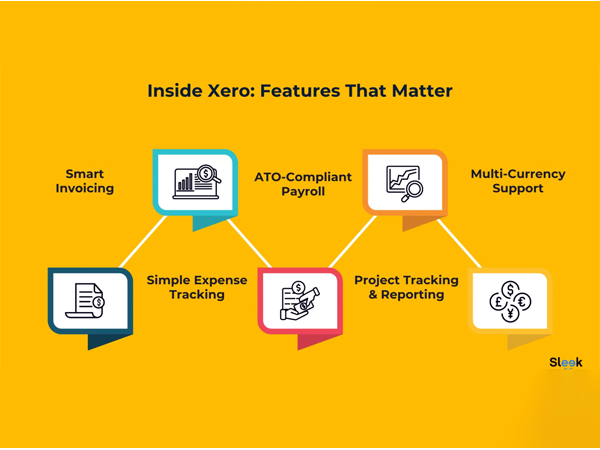
For growing companies, Xero works best when the accounting needs are still relatively straightforward, but the team wants better visibility than spreadsheets provide.
4. NetSuite
NetSuite is a better fit for companies that need a broader cloud ERP system instead of only accounting software. It can support financial management, reporting, inventory, fulfillment, sales, and other business operations in one system.
Departments, locations, and products expand with the business. Keeping financial data connected to inventory, sales, procurement, and operations becomes essential for accurate reporting.
NetSuite can be useful for businesses that have outgrown entry-level finance tools and need stronger reporting, controls, and operational integration.
It is usually a bigger implementation than basic bookkeeping software.
That makes it better suited for companies with clear growth plans, system requirements, and internal ownership of the rollout.
5. Sage Intacct
Sage Intacct is for advanced financial management. It is often used by growing organizations that need stronger reporting, accounts payable, accounts receivable, cash management, purchasing, dashboards, and multi-entity visibility.
Its dimensional reporting is useful for businesses that want to track performance by department, location, project, product line, customer type, or entity.
When Sage Intacct Makes Sense
It may fit companies that need:
- Multi-entity reporting
- Stronger financial dashboards
- Advanced accounts payable
- Cash visibility
- Purchasing workflows
- Project accounting
- Real-time reporting
- Approval controls
- Finance team collaboration
Sage Intacct is most useful when leadership needs financial reports that go beyond a basic profit and loss statement.
How to Choose the Right Accounting Tool
Ignore the feature list. First, identify your biggest accounting pain point. A business with poor invoicing needs a different tool than one struggling with lease schedules, debt compliance, or multi-entity reporting.
Is close taking too long? Are reports unreliable? Are bills missed? Are prepaids and accruals tracked manually? Are leaders asking for reports finance cannot produce quickly?
The tool should solve a specific operational issue.
Final Thoughts
Growing companies need accounting tools that match their complexity. But choosing finance software isn’t about buying the platform with the longest feature list. FinQuery can support specialized accounting for leases, debt, accruals, and prepaids. QuickBooks Online and Xero can help with core bookkeeping. NetSuite and Sage Intacct can support more advanced financial management. Zoho Books works best for small teams requiring structure and automation.
The right software should reduce manual work, improve accuracy, and give leaders numbers they can trust.
When finance systems grow with the company, finance becomes a stronger part of decision-making instead of a reporting bottleneck.
FAQs
What is the best accounting software for a growing business?
When should a company upgrade its accounting software?
It’s time to upgrade when spreadsheets become difficult to manage, month-end close takes too long, reporting becomes unreliable, or your finance team spends excessive time on manual reconciliations and approvals.
Can small businesses use ERP software like NetSuite?
Yes, but ERP systems make the most sense once operations become more complex, such as managing multiple entities, inventory, locations, or integrated business processes.