EBITA compares earnings from operations before interest, taxes, and amortization are taken into account.
Beyond Revenue Growth: How EBITA Measures a Tech Business
POST BY
PUBLISHED
August 19, 2026

Revenue growth tends to attract a lot of attention when a technology company makes its results public, but sales alone reveal a few parts of the bigger story.
Looking at EBITA can help display whether a growing tech business is also building a stronger underlying operation, allowing companies to reconsider their options if needed.
This article highlights the importance and relevancy of EBITA for technology companies when revenue growth becomes expensive, why comparing firms requires context, and its various limitations.
Table of Contents:
Revenue Growth Only Tells Part of the Story
A tech business can scale quickly while spending heavily to make that growth possible. It may hire hundreds of employees, increase its advertising budget, open offices in new locations, or spend a lot more on customer acquisition departments.
Although sales may rise impressively, the business could still struggle to transform those sales into actual operating earnings.
This is where understanding EBITA meaning becomes useful. EBITA compares earnings from operations before interest, taxes, and amortization are taken into account. In simple terms, it offers a way to look at earnings from business operations without some expenses related to financing, taxes, and the accounting treatment of certain intangible assets.
Imagine two software companies that each generate $200 million in annual revenue. One produces $40 million in EBITA, while the other produces only $5 million.
Their sales figures may appear identical or similar, but the organizations behind such numbers are clearly operating very differently.
For investors and managers, that gap can be just as important as revenue growth itself.
Why EBITA Can Be Relevant for Technology Companies
Technology businesses usually have characteristics that prove revenue statistics to be an incomplete measure of performance.
A young software company, for instance, may spend quite a lot on sales teams and marketing as it wants to capture market share early.
Whereas another company may have grown through acquisitions, bringing patents, software, customer relationships, and other assets onto its balance sheet and financials.
Amortization associated with some of those assets can affect reported earnings. Because EBITA excludes amortization, it provides another way to examine the performance of the underlying business.
That does not make amortization irrelevant. It simply allows someone studying the company to view its finances from a different angle.
Looking at the EBITA Margin
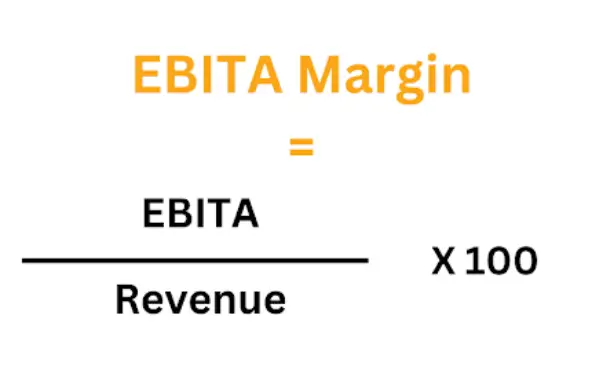
The raw EBITA figure becomes more informative when it is compared with revenue.
Suppose a business reports $500 million in sales and EBITA of $75 million. Its EBITA margin stays at 15%. If sales power up to $600 million the next year and EBITA reaches $108 million, the margin has enhanced to 18%.
That improvement tells an interesting story. The company has not only generated more business; a larger portion of its revenue is now showing up as operating earnings under this measure.
For a growing technology company, this may suggest that scale is beginning to work in its favor. Software companies can be especially interesting in this respect because selling additional subscriptions does not always require costs to rise at the same pace as revenue.
When Revenue Growth Becomes Expensive
Not all growth is equally valuable.
Consider a company that increases its revenue by 30% but has to double its sales and marketing expenses to achieve it. That strategy may make sense temporarily, especially when entering an untapped market.
If the pattern continues for years, however, questions about efficiency become harder to ignore.
EBITA can help highlight this issue. If revenue keeps climbing while EBITA remains flat or declines, the company may be spending increasingly large amounts to produce each additional dollar of sales.
The opposite situation may also occur. Revenue growth may decrease from 30% to 15%, while EBITA expands considerably. On the surface, slower growth may appear quite disappointing.
Financially, however, the company could actually be becoming more mature and efficient.
Comparing Tech Businesses Requires Context
EBITA can also help when comparing companies, but those comparisons need to be made carefully.
A cloud software provider, semiconductor manufacturer, cybersecurity company, and online marketplace may all be described as technology businesses, yet their economics can be very different. Their staffing needs, infrastructure expenses, pricing models, and capital requirements are not the same.
Company size and maturity matter too. A business investing greatly in expansion should not automatically be expected to produce identical margins as an established competitor prioritized on profitability.
It is usually more useful to compare similar businesses and examine how their EBITA and margins change over several years.

EBITA Still Has Its Limits
No financial measure should be treated as a complete picture of a company, and EBITA is no exception.
Because it excludes certain expenses, it can make operating performance easier to examine, but those excluded costs still exist. Interest payments matter to a company carrying significant debt. Taxes affect the cash ultimately available to shareholders, while intangible assets can represent very real investments.
Cash flow, debt, customer retention, revenue growth, gross margins, and competitive position all add valuable context.
For technology businesses in particular, the quality of growth matters as much as its speed. Revenue shows whether customers are spending more with a company. EBITA helps explore what the business is getting from those sales. Looking at both can provide a much clearer view of whether rapid expansion is creating a healthier company or simply a larger one.
FAQs
What does EBITA do?
What does EBITA exclude?
EBITA excludes certain expenses; it can make operating performance easier to examine, but those excluded costs still exist.
What does it mean when the revenue increases but EBITA stays constant?
If revenue keeps climbing while EBITA remains flat or declines, the company may be spending increasingly large amounts to produce each additional dollar of sales.