Ans: Learning a new language seems like a difficult task in the beginning. There are numerous areas where you have to focus on to master a language, including grammar, vocabulary, pronunciation, writing, and reading. Start with a language learning app. It will make things easier for you as it is designed to match your individual pace of learning.
10 Best Language Learning Apps: Tried and Tested by Experts
POST BY
PUBLISHED
February 19, 2026
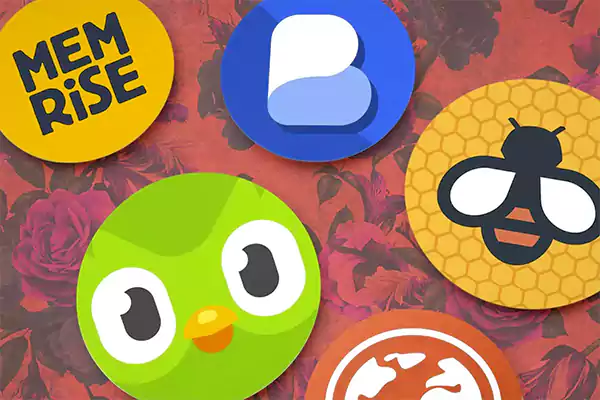
Learning a new language certainly adds a new skill! However, aspiring to grasp a new language is a very challenging task, especially if you are a busy adult. Fortunately, we have some great language learning apps that take only a few minutes a day to help you learn vocabulary, grammar, and concepts of a whole new language.
There are many options available online, and selecting the best language-learning app can be an arduous task. Therefore, with thorough research, I have formulated a list of apps that you can pick and choose from according to your requirements.
Table of Contents:
Quick Comparison Table of Best Language Learning Apps
After spending time on many apps and understanding how they work, I have found some of them that are truly effective in improving my skills, including Duolingo, Babble, Mondly, and Busuu. Let’s quickly compare first all the language learning apps based on their focus area, cost structure, and for whom they are best suited:
| App | Focus Area | Best For | Cost Structure |
| Duolingo | Building vocabulary and basic grammar | Maintaining habit, beginners, casual learners | Free (with ads), Premium (Super and Max) |
| Babbel | Effective in grammar and structure | Serious learners, people who want to learn European languages | Subscription |
| Mondly | Building vocabulary, has chatbots | Visual learners, tech enthusiasts who want to learn faster | Free (limited), premium for add-ons |
| Memrise | Real-life short videos help in memorization | Beginners to intermediate learners, visual and auditory learners | Free (ads and limited), pro membership |
| Drops | Vocabulary building, image-based learning | Visual learners, casual learners | Free (limited), premium |
| Pimsleur | Speaking proficiency, listening-based podcast format | Auditory learners, busy individuals, want to improve speaking specifically | Free trial, premium |
| Busuu | Speaking proficiency and correction | Goal-oriented learners, people who prefer social interaction | Free (limited), premium |
| Rosetta Stone | Visual learning, Improving pronunciation | Visual learners, auditory learners | Subscription |
| Gymglish | Personalised learning, short video format | Intermediate to advanced learners | Free trial, subscription |
| Yabla | Video-based education, interesting way to learn | Intermediate to advanced learners | Free trial, subscription |
Top 10 Language Learning Apps For Beginners and Advanced Learners
A language learning app can work as a productivity software by saving your time and offering an easy learning method. I personally use them, and they helped me communicate fluently in a new land during my international trips. Here are the detailed description of all of them:
1. Duolingo
I have been using Duolingo for months now and want to mention that its gamified way of language learning and vibrant interface deserve huge praise. The app is versatile and supports you to learn multiple languages simultaneously from a wide range of 40 languages that it offers.
According to their annual report 2025, the Japanese and Korean languages have gained popularity. It is one of the best free language learning apps that keeps you hooked and motivated throughout your knowledge quest.
| Best For | Maintaining habits, beginners, and casual learners |
| Cost | Free Super Duolingo ($13/month or $60/annually) Super Family Duolingo ($120/annually) Duolingo Max ($30/month or $168/annually) |
| Pros | Cons |
| Many free features (with ads) | Limited speaking practice |
| Includes 40+ languages | Not designed for fluency |
| Gamified | |
| Have “Stories” for reading interesting comprehension |
Also read: Top 10 3D Printing Software Programs with Key Features, Capabilities, Comparisons, and More!
2. Babbel
Using Babbel is just like sitting in a classroom and learning the language in an app form. You get to hear, see, speak, and write on this app, which is the holistic way to master a new skill. The 15-minute daily exercise is standard to fit into your daily routine without feeling bored and overdoing it.
It also offers my activity module that helps you to monitor your performance and stay motivated in the process. In the higher-paid version, you can access the premium live service. It offers one-to-one discussions and small group classes (up to 6 students) guided by a professional teacher.
| Best For: | Serious learners, people who want to learn European languages |
| Cost: | Month ($18) Three months ($41.85 total) Six months ($83.70 total) Twelve months ($107.40 total) Lifetime ($299) |
| Pros | Cons |
| Thorough, effective lessons with practical conversation | Only 14 languages are available |
| Well structured | No free version |
| User-friendly, easy interface | Less effective for non-European languages |
| Accurate speech recognition |
3. Mondly
Mondly is a fun and vibrant app offering 41 languages to learn. The app is filled with images, translations, and hearing exercises to help you learn faster. You can also integrate many VR and AR products offering language lessons, chatbots, and games that will enhance your experience.
The application is free to use, but you can access the paid plan for advanced features. In the app, new updates keep coming; now it has become an AI powered language learning app.
| Best For: | Visual learners, tech enthusiasts who want to learn quickly |
| Cost: | Free Premium version ($12/month or $59.99/annually or $99.99/lifetime) |
| Pros | Cons |
| Interactive VR/AR features | Not advanced much beyond the basics |
| Accessible for free | Limited depth in learning |
| 41 languages are available | Less grammar instructions |
| Good for beginners |
4. Memrise
Memrise offers you the opportunity to grasp a language in a short video format. Lessons are designed, featuring two or three locals conversing in phrases and words. It is one of the good language learning apps to understand the tone, gendered usage, and pronunciation of words.
The application offers 34 languages with some amazing features, like a video library where you can see the longer exchanges. You can also skip the phrases you already know if you’re polishing up your already known language.
| Best For: | Beginners to intermediate learners, visual and auditory learners |
| Cost: | Free (limited and ad-supported) Pro membership ($25/month, $75/year, or $290/lifetime) |
| Pros | Cons |
| Has real-life videos from native speakers | Limited speaking practice |
| Can skip the phrases that you are already aware of | Expensive premium subscriptions |
| Best for vocabulary retention after spaced intervals | Lacks structure and comprehensive grammar learning |
| Gamified Experience |
5. Drops
Drops has a fast-paced game-like design that makes learning the new language a less daunting task. The software offers a 5-minute free everyday and after that you have to wait for 10 hours for the next exercise. You can go for a premium version if you want to unlock all the lessons.
It shows the learner a word in the Greek alphabet and the English alphabet, provides the image of it, and says the word. You can check out the statistics, like correct answers and wrong answers, after the completion of each lesson to monitor your progress.
| Best For: | Visual learners, casual learners |
| Cost: | Free (limited), Premium ($13/month, $70/annually, or $160/lifetime) |
| Pros | Cons |
| Visually focused | Limited to word recognition |
| 5 minutes of free daily exercise | No sentence structure knowledge |
| Easy and fun to use | No grammar knowledge |
| Good for vocabulary building |
6. Pimsleur
Pimsleur offers to learn a new language in a podcast format. With the inclusion of over 51 languages, the app also offers a driving mode so you can become multilingual while driving without the need to look at the screen.
In the app, you have to select the language that you aspire to learn and start a 30-minute auditory session. The session is designed to enhance your conversational skills and practical speaking.
| Best For: | Auditory learners, busy individuals, people who want to improve speaking specifically |
| Cost: | Seven-day free trial, one language ($20/month or $150/annually), All languages ($21/month or $165/annually), $798/lifetime |
| Pros | Cons |
| Best for audio-based learning | Lacks reading and writing practice |
| Effective for pronunciation | The subscriptions are expensive |
| Designed to be easily integrated into a busy routine. |
7. Busuu
Busuu is one of the best language learning programs because of its peer-feedback system. For instance, if you write a sentence or speak something out, Busuu will send it to the native speakers who can offer feedback on it. They are fellow users to whom you can also offer feedback for your native language.
If you subscribe to the premium, it will frame a study plan for you that you will have to reach in stipulated time.
| Best For: | Goal-oriented learners, people who prefer social interaction |
| Cost: | Free (limited), Premium ($13.90/month, $50.70/six months, and $83.40/annually |
| Pros | Cons |
| Well-structured courses | The free version is limited |
| Feedback from native speakers | Community feedback varies |
| Effective vocabulary tips |
8. Rosetta Stone

Rosetta Stone is a well-known app that comes with a total immersion method. It focuses on image-based learning and speech recognition for better pronunciation, avoiding direct translation.
The app also has a feature “Seek and Speak”. This is a very interesting way to learn by pointing the camera at an object and getting it translated into a language seeking to learn.
| Best For: | Visual learners, auditory learners |
| Cost: | $44.85/three months, $131.40/annually, or $219/lifetime, $150/ lifetime in one language |
| Pros | Cons |
| Well-polished interface | Less grammar explanations |
| Immersive Method (No direct translation for better learning) | Expensive |
| Beneficial for building vocabulary | Repetitive and slow lessons |
Also Read: The Best Photo Editing Software in 2026: Find the Perfect Fit for Your Needs
9. Gymglish
Gymglish surpasses expectations as a learning languages app because of its personalisation. It adapts well to individual learning levels with its personalised lessons and error correction features.
By giving only a short time of 10-15 minutes a day, you can see significant improvement. It helps in understanding the weak points and working on them in an engaging way.
| Best For: | Intermediate to advanced learners |
| Cost: | 7-day free trial $21.60/month or €79.99/annually or €199.99/lifetime |
| Pros | Cons |
| Adaptive learning | One lesson per day |
| Short 10 to 15-minute lessons | No foundational learning, that’s why it’s not good for beginners |
| AI-powered learning | |
| Detailed feedback |
10. Yabla
Yabla is best suited for advanced learning. It offers videos featuring native speakers for good listening comprehension exercises. The videos are based on diverse topics, including interviews, documentaries, and news. This helps you to study a new language in an engaging manner.
| Best For: | Intermediate to advanced learners |
| Cost: | 15-day free trial, $12.95/month $54.95/ 6 months, or $99.95/year (only in one language) |
| Pros | Cons |
| Immersive learning through interesting videos | Lacks foundational grammar knowledge, so not good for beginners |
| Real-world language context | Offers only six languages |
| Effective for learning accents |
How to Choose the Right Language Learning App?
As we have discussed, the best apps for learning languages, I hope choosing the right one is going to get a lot easier for you. There are some factors that you can keep in mind while making your choice, including identifying your learning style, knowing your goals, and reading reviews and ratings.
- Identify Your Learning Type: Different people prefer distinct learning types, including auditory, visual, writing, or reading. Choose according to the specific type; it will improve engagement and comprehension. For instance, if you are a visual learner, then you should select Memrise, and if you are an auditory learner, then you should go for Pimsleur.
- Know Your Goals: What are your goals? Do you want to improve your grammar or speaking skills? Different apps are designed to improve different aspects of language learning, so understanding these questions first is crucial. If your focus is on grammar and vocabulary, then select Babbel. If you want to improve your speaking, Pimleaur is preferred.
- Read Reviews and Ratings: Before selecting any app, don’t forget to read reviews and ratings by users who have already used the app. Pay attention to the aspects like ease of use, improvement outcome, and customer service. Evaluate and then select the right one.
- Test with Free Trials or Versions: Many of the apps offer a free trial. Analyse the app in those days before investing your money into it. The best strategy is to try multiple apps in the free trials and compare them according to your learning type and goals. Be careful of the apps that don’t showcase the full picture in the trial period.
Wrapping Up
What is the best language learning apps? The answer differs from individual to individual as everyone learns at a different pace. If you are planning to access any of the apps like Duolingo, Babbel, Pimsleur, or Drops, it’s recommended that you first install, try, and then buy.
With this, you can find the right app according to your requirements and learning type.
FAQs
Q: How do I start learning a new language?
Q: How long does it take to learn a new language?
Ans: The time of mastering a language varies from individual to individual. There are numerous studies conducted over this that conclude different time frames. However, it’s found that you can attain conversational ability in a few months, but getting fluent may take a year or longer.
Q: What’s the best app for auditory learners?
Ans: Pimsleur is the preferred app for auditory learners. With it, you can learn a new language in podcast form. It has a driving mode too, which helps you to listen to lessons without the need to look at the screens.
Q: Do language apps actually teach grammar rules?
Ans: Yes, but not all of them are grammar-focused. Some of them, with which you can certainly improve your grammar, are Babbel, Duolingo, and Busuu.
Q: Do language learning apps include speaking practice?
Ans: Yes, but the speaking practice varies from app to app, like Rosetta Stone, which offers a speech recognition function for pronunciation practice, and Busuu lets your speech be reviewed by native speakers.
Q: Which app is best for visual learners?
Ans: Drops work best for visual learners. It uses images to teach the new language. The other app is Memrise that encompasses short videos from native speakers that help you to grasp new words and pronunciation.