Ans: AI SaaS Product classification criteria are the standards on which the AI SaaS can be aggregated to help users in selecting the best service.
What is the AI SaaS Product Classification Criteria? Importance, Challenges & More
POST BY
PUBLISHED
December 23, 2025
Are you planning to integrate SaaS into your business?
Then I will suggest that you go with AI SaaS to accelerate the business process with smart assistance. It is taking the market by storm owing to its versatile character and multiple types.
But before that, you should go through the AI SaaS product classification criteria that will help you understand the fundamental standards of their grading to learn which one suits you best.
Table of Contents:
- What is the AI SaaS Product Classification Criteria?
- What are the Bases of AI SaaS Product Classification Criteria?
- Why is AI SaaS Product Classification Criteria Important?
- What are the Potential Challenges in AI SaaS Product Classification Criteria?
- What are the Prospects for AI SaaS Product Classification Criteria?
- What are the Best Practices for Considering AI SaaS Products Classification Criteria?
- Conclusion
- FAQs
What is the AI SaaS Product Classification Criteria?
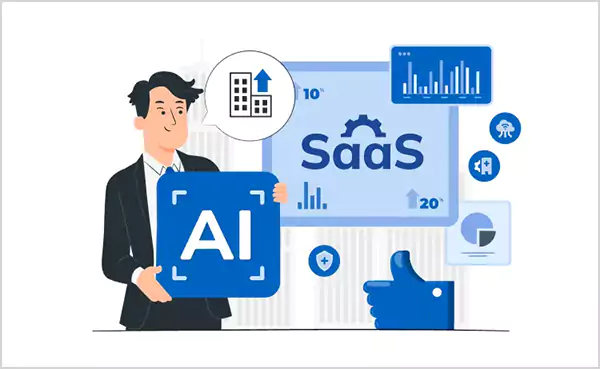
Ai SaaS product classification criteria is the set of standards that group the AI-based SaaS products in certain categories based on their features.
According to Fortune Business Insights, the global AI-SaaS market is predicted to cross $775 billion by 2031 with a CAGR of 38.28%.
Talking about AI SaaS products, they are software with inbuilt AI capabilities used over the internet. The AI technology incorporated may vary based on the requirements, such as machine learning, generative AI, or natural Language Processing.
They provide advanced functionalities that surpass those of traditional SaaS, which relies on human intervention for most of its functions. Some examples of SaaS are Dropbox and Slack, while Grammarly and HubSpot are examples of AI SaaS.
The AI SaaS is classified into certain categories based on its features, functions, and suitability.
Here are the bases of classification of AI SaaS products.
Suggested Read: SaaS Sales Process: Everything You Must Know in 2025
What are the Bases of AI SaaS Product Classification Criteria?
The bases of AI SaaS product classification criteria are the automation level, installation methods, target business type, AI technology employed, level of personalization required, and pricing.
Let’s understand each one of them thoroughly.
1. Automation Level
- Requires Assistive Tools: These SaaS services come with a detailed dashboard, which is used for trend analysis and making decisions.
- Demands Human Surveillance: In these types, human oversight and approvals are necessary.
- Completely Autonomous: These services require the least human intervention and assistance and work most of the time on their own.
2. Installation Method
- Hybrid: Here, the SaaS will be installed in a system over the cloud and local systems.
- Edge: In this type, computation takes place on the device, which will facilitate its offline usage.
- On-premises: The service is on the systems kept in the premises where most users use it, such as Banks.
- Cloud-based: It is the most common SaaS model, where the entire system remains on the cloud.
Note: While choosing these options, always keep data privacy at the top.
3. Business Type
- Finance: Such an AI SaaS is best for making financial predictions and tracking expenses. Kensho is one of its best examples.
- Market and Sales: Through these, finding leads, scoring their potential, and predicting trends can be simplified. For example, HubSpot AI and Jasper.
- HR: In these services, screening resumes and analyzing the interview and experience of the candidate can be further simplified.
- Customer Support: The chatbots and automated replies can be integrated into the business through it. Intercom and Zendesk AI are the best examples of it.
4. Tech Employed
- Generative AI: These include the large language models that interact in a human-like manner.
- Machine Learning: The SaaS working with machine learning uses the data to make inferences and take decisions.
- Natural Language Processing: These AI SaaS types come with the best chatbots and are adept text analyzers.
- Computer Vision: Such SaaS services are best for analyzing and interpreting the visual data, such as photos, videos, and even characters.
- Rule-based AI: It contains pre-programmed local sequences, which are used for making decisions. However, it is considered an early AI generation and hence used the least.
5. Requirement of Personalization and Training
- Fully Customizable: This SaaS can be personalized to the highest level and is generally employed in learning hubs and elderly assistance.
- API-Assisted: They are designed to integrate with other ecosystems and offer versatility in functions.
- Prebuilt Experiences: This type is usually employed in educational functions.
6. Domain Specificity
- Vertical AI SaaS: This SaaS is built for specific industries and market types. Here, the AI learns the niche-specific data and applies the respective understanding in making decisions. Some examples of it are
- PathAI for healthcare
- ROSS intelligence for legal purposes
- Horizontal AI SaaS: This SaaS works for all types of industrial and market needs. They process broad features and are good for enhanced collaboration and communication. Some of these examples are Notion AI and Grammarly.
7. API Integration
- Plug-n-play: This SaaS is linked to the ERPs and CRMs, which simplifies their integration.
- API First Tools: They integrate the AI functions into SaaS through an API. OpenAI is the best example of it.
- Standalone Services: They act as an All-in-one platform for the business, providing an array of necessary services.
8. Pricing
- Freemium: Through this, you can get a free trial of the service to check if it matches your needs or not.
- Subscription-based: Here, you can choose a monthly or an annual plan based on the service provided.
- Custom Pricing: Some AI SaaS also provides custom pricing to personalize the plan as per the requirements of the users.
- Use-based Plans: In these AI SaaS, you pay for what services you use out of their stack.
Note: Its pricing is similar to the SaaS pricing model.
Why is AI SaaS Product Classification Criteria Important?

The AI SaaS product classification criteria are important in selecting the best service, simplifying learning, estimating the cost, and understanding the benefits of AI-based SaaS.
This criterion is highly beneficial to analyze the service agreement and filter out the best options.
Here are its benefits explained comprehensively.
- Selecting the Best Service: AI SaaS is a whole new field, and its classification will help you to select the best for your business.
- Simplifying Its Understanding: This criterion simplifies the learning about AI SaaS and makes it more understandable.
- Gauging the Expenditure: If you choose freemium, it won’t cost you at all, while customizable plans may fit your budget.
- Mentions the Benefits of AI: As this categorization is superior to the traditional SaaS, it implicitly provides you with the scope of how your business will benefit through AI assistance.
What are the Potential Challenges in AI SaaS Product Classification Criteria?
The potential challenges with AI SaaS product classification criteria are that they are highly technical in nature, lack universal standards, are constantly updating new categories, and provide fewer options in some niches.
After going through the classification criteria, you need to understand their potential fallouts as well, which are as follows:
- Highly Technical: The classification is highly technical and may not be understood by everyone planning to incorporate it.
- Lack of Universal Standards: There is no universally accepted criterion for AI SaaS product classification.
- Constantly Updating Categories: With emerging technologies being integrated with SaaS, the scope of this criterion is also expanding, hinting at its volatile character.
- Some Niches Have a Few Options: When talking about the vertical AI SaaS, the options for limited to the respective fields, whereas there is no such issue with horizontal AI SaaS.
What are the Prospects for AI SaaS Product Classification Criteria?
The prospects for AI SaaS product classification indicate a direction toward Agentic AI, explanatory AI, AI as a Service, and adherence to the AI regulations.
These factors can impact this classification in the following ways:
- Agentic AI: Agentic AI deals with setting goals, planning for them, and taking appropriate actions to achieve them by working autonomously and minimizing human oversight. It is expected to be integrated with the SaaS soon.
- Explainable AI (XAI): It is the branch of AI that utilizes the algorithms and methods that allow humans to access and trust its results. In the near future, we can see it being employed in AI SaaS product classification.
- AI as a Service (AIaaS): AI as a Service allows access to AI tools and capabilities through the cloud while providing them through AIP or platforms. This will further reduce the requirements of investing in infrastructure and employing expert teams for it.
- Regulated AI: As the AI is escaping to unexplored niches, the governments are gradually passing regulations and legislation to control its application in various fields, which can also impact AI SaaS product classification.
After going through these trends, you can consider the following suggestions to buffer their impact.
What are the Best Practices for Considering AI SaaS Products Classification Criteria?
The best practices for AI SaaS product classification criteria are seeking expert assistance, considering user feedback, and enhancing personalization.
Here is a detailed explanation of these suggestions that will help you in integrating an AI SaaS product.
- Get Expert Assistance: You can seek the assistance of any SaaS expert to understand the technical nature of the service categories.
- Seek Feedback: After going through the criteria, you can also take feedback from other users of the service to learn what worked for them and what is being favored.
- Focus on Personalization: The more personalized the service is, the better it will align with the customer’s needs. Make sure you choose the one that stands closer to your user’s needs.
- Adhere to the Prevailing Regulations: Always make sure the SaaS service you select is compliant with the regulations and legislation in your native country.
- Include the Emerging Technologies: If possible, choose the one with provides the latest emerging technology to your business.
Conclusion
The AI SaaS product classification criteria are based on some fundamental factors that make it convenient to understand what type fits a user.
If you want to integrate such a service into your business, go through this classification, check the standards, and identify which one suits you.
Next Read: 14 SaaS Performance Metrics to Track, Measure, and Scale Your Business
FAQs
Q: What is the AI SaaS Product classification criteria?
Q: Why is AI SaaS product classification necessary?
Ans: The AI SaaS product classification can assist you in choosing the best service for you that aligns with your business demands.
Q: How does AI SaaS differ from traditional SaaS?
Ans: The AI SaaS comes with integrated artificial intelligence, which can make smarter results than a traditional SaaS can’t do.
Q: Is a single AI SaaS sufficient for multiple categories?
Ans: Yes, the horizontal AI SaaS services have an ingrained feature that fits the demands of the masses, which can be employed for multiple categories.